Quick care
- Light
- Bright indirect
- Water
- Soak for 20 to 30 minutes every week or two, then dry upside down
- Humidity
- Average room air is fine. Dry air means more soaking.
- Temperature
- 10 to 32°C (50 to 90°F)
- Soil
- None. Grows on wood, rock, or in an open dish.
- Feeding
- Air plant fertilizer at quarter strength in the soak water, monthly
- Pets
- Non-toxic to cats and dogs
- Difficulty
- Easy
- Mature size
- 5 to 30 cm (2 to 12 in), depending on the type
- Propagation
- Pull off the pups once they are a third of the mother's size
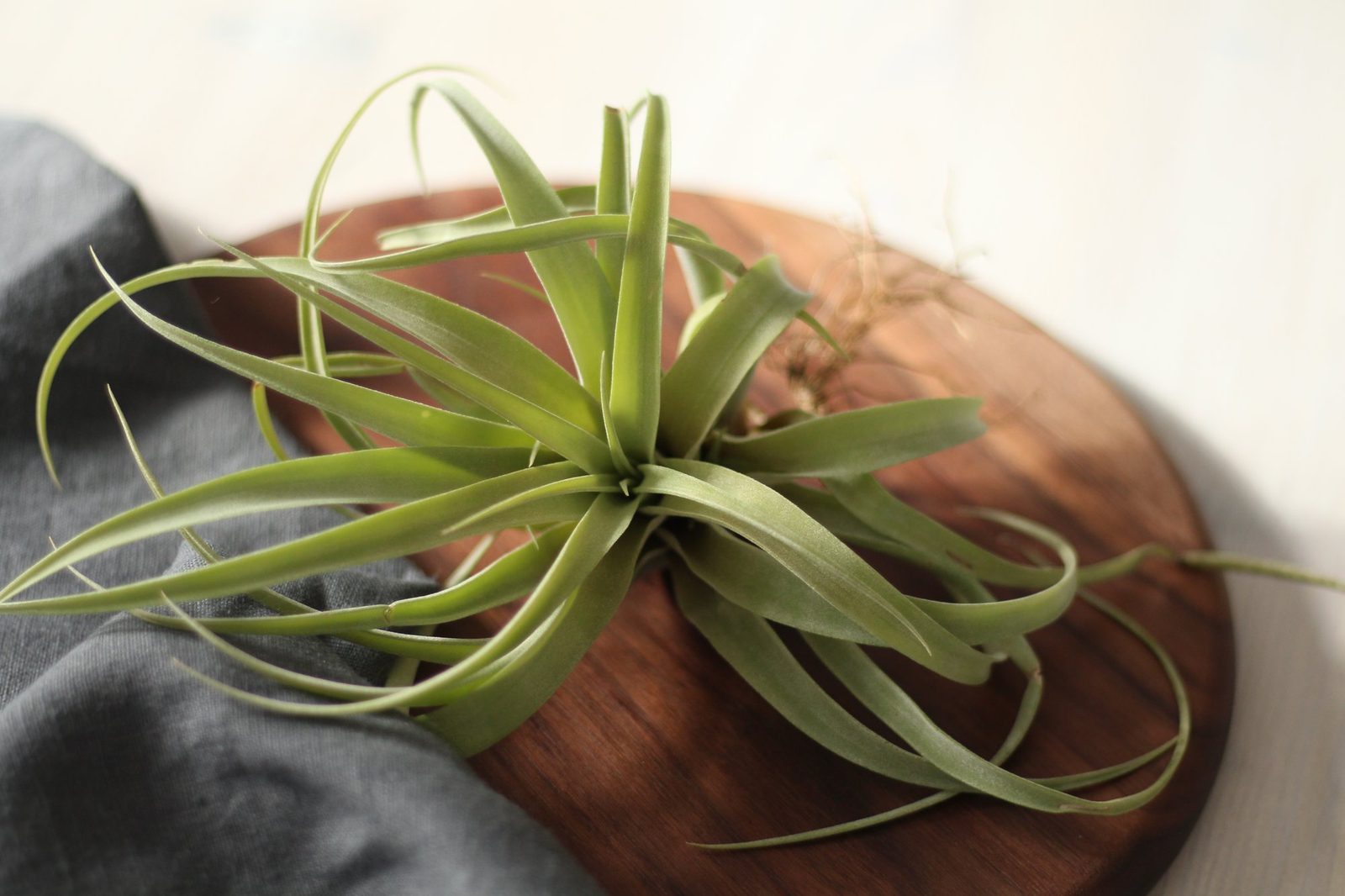
Air plants grow without soil. In the wild, they cling to trees and rocks and take water and food in through their leaves. Indoors, they need light and a regular soak, and that is about it.
They are bromeliads, cousins of the pineapple.
Light
Give air plants bright, indirect light, close to an east or west window. A little morning sun is fine for silver, fuzzy types.
Air plants on a dark shelf starve over a few months. A bathroom window or a bright kitchen windowsill works well.
How to water air plants
Misting alone is not enough in most homes. Soak them.
- Every week or two, sink the plant in a bowl of room-temperature water for 20 to 30 minutes.
- Lift it out and shake off the extra water.
- Set it upside down on a towel to dry.
- Make sure it is dry within about four hours. Water trapped in the base rots it.
Rainwater, pond water, or bottled spring water works best. Avoid softened water.
Soak more often in dry winter air. Silver, fuzzy types, like xerographica, need less water than smooth, green ones. Read how to tell if a houseplant is overwatered or underwatered for signs of each.
Mounting and display
Set them in an open dish, glue them to wood with a dab of plant-safe glue, or tuck them into a frame. Avoid closed glass globes. Air plants need air to dry out.
Humidity and temperature
Average room air is fine. Keep them between 10 and 32°C (50 and 90°F), away from heat vents.
Feeding
Add an air plant or bromeliad fertilizer at quarter strength to the soak water once a month in spring and summer.
Pruning
Trim brown, dry leaf tips at an angle. Pull off dead outer leaves. Trim long, dry roots if you like. They only anchor the plant.
Blooms and pups
Each air plant blooms once, often with bright pink, purple, or red bracts and tiny tube flowers. Many blush red before they bloom.
After it blooms, it makes pups at its base. Wait until a pup is one third the size of the mother, then pull it free with care. Or leave the pups on to grow a clump.
Problems
| What you see | Most likely cause |
|---|---|
| Leaves fall out from the center, base turns dark | Rot from water left in the base |
| Curled, rolled leaves | Thirsty. Soak it longer. |
| Brown, crispy tips | Dry air or not enough water |
| Pale, soft, slow growth | Not enough light |
| Mother plant fades after blooming | Normal. Keep the pups. |
Pests
Pests are rare. Mealybugs and scale can hide at the base of the leaves.
Pet safety
The ASPCA lists air plants as non-toxic to cats and dogs. Cats love to bat them around, so keep them up high.
Varieties
- Tillandsia ionantha is small and spiky, and blushes red before it blooms.
- Tillandsia xerographica is a big, silver rosette with curling leaves.
- Tillandsia caput-medusae has a round base and twisting leaves, like Medusa’s hair.
- Tillandsia bulbosa has a swollen base and thin, wavy leaves.
- Tillandsia streptophylla has thick, curly leaves that curl more when dry.