Amaryllis care guide
Hippeastrum, also called Hippeastrum, knight's star lily
Published 2022-11-01
Quick care
- Light
- Bright direct
- Water
- When the top 2 to 3 cm (1 in) of soil is dry. None while it rests.
- Humidity
- Average room air is fine
- Temperature
- 18 to 24°C (65 to 75°F) while growing. 10 to 13°C (50 to 55°F) while it rests.
- Soil
- Well-draining houseplant mix, in a snug pot
- Feeding
- None while in bloom. Every 2 to 4 weeks while the leaves grow.
- Pets
- Toxic to cats and dogs. The bulb is the most toxic part.
- Difficulty
- Easy
- Mature size
- Flower stalks 30 to 60 cm (1 to 2 ft) tall
- Propagation
- Small offset bulbs that form beside the main bulb
An amaryllis bulb already holds its first flowers when you buy it. Plant it, water it, and it blooms in about 6 to 10 weeks. The hard part is the next year.
The holiday amaryllis is Hippeastrum, from South America. The true Amaryllis is a different plant from South Africa. Stores call both amaryllis.
Planting a bulb
Pick a firm, heavy bulb with no soft or moldy spots. Bigger bulbs make more flower stalks.
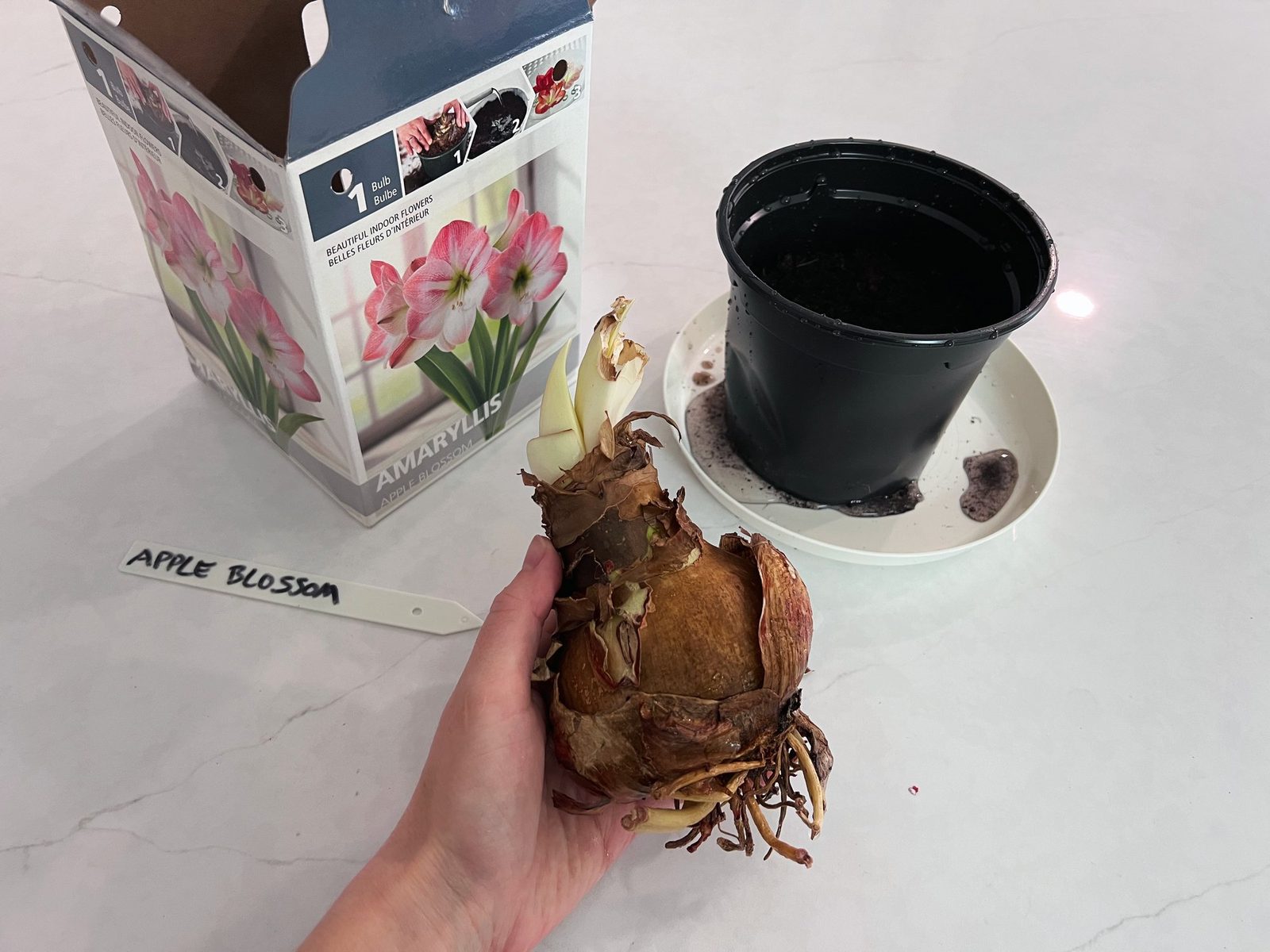
Use a heavy pot only 2 to 5 cm (1 to 2 in) wider than the bulb. A snug pot is fine. Fill it with houseplant mix and set the bulb so the top third sits above the soil.
Water once, then wait. Water again only when you see green growth or the soil dries out. Wet soil with no leaves rots the bulb.
For flowers at Christmas, plant in late October or early November. Plant a few bulbs two weeks apart for flowers all winter.
Light
Give it the sunniest window you have while it grows. The stalk leans toward the light, so turn the pot every few days.
Once the flowers open, move it out of hot sun. A cooler, bright spot makes the flowers last longer.
Water
Water when the top 2 to 3 cm (1 in) of soil is dry, once leaves or a stalk are growing. Water until it drains, then empty the saucer. Keep water off the top of the bulb.
Stop watering while it rests. Read how to tell if a houseplant is overwatered or underwatered.
Soil and potting
Any well-draining houseplant mix works. Amaryllis likes a snug pot and can stay in the same one for a few years. Repot when the bulb almost touches the sides, right after it rests. See how to repot a houseplant step by step.
Humidity and temperature
Average room air is fine. Warm rooms of 18 to 24°C (65 to 75°F) get it growing. Hot rooms make tall, weak stalks and short-lived flowers.
Feeding
Do not feed a new bulb or a plant in bloom. Once the flowers fade, feed with a balanced liquid fertilizer every 2 to 4 weeks while the leaves grow. The leaves build next year’s flowers.
Pruning and staking
Tall stalks flop, and a top-heavy plant can tip its pot. Push a thin stake into the soil beside the bulb, away from the roots, and tie the stalk to it.
When the flowers fade, cut the stalk off 3 to 5 cm (1 to 2 in) above the bulb. Leave every leaf in place.
Getting it to bloom again
- Grow the leaves. After it blooms, keep it in your sunniest window and feed it. In a cold climate, move it outside once nights stay above 10°C (50°F). Start it in shade so the leaves do not burn.
- Let it rest. In late summer or early fall, bring it inside and stop watering. Let the leaves yellow, then cut them off.
- Keep it cool and dark. Store the pot or the bare bulb at 10 to 13°C (50 to 55°F) for 8 to 10 weeks. A cool basement works.
- Wake it up. Bring it to a warm, bright spot and water once. Flowers follow in 6 to 10 weeks.
No flowers the next year most often means the leaves did not get enough sun in summer, or the rest was too short.
Waxed amaryllis
Waxed bulbs come coated in colored wax with no pot and no soil. They need no water. Set one in a bright spot and it blooms.
Treat a waxed bulb as a one-time flower. The wax keeps water out, and the roots are often cut off.
Propagation
Big bulbs make small offset bulbs beside them. Cut an offset off with some roots when you repot, and pot it on its own. It needs a few years of growth before it blooms.
Problems
| What you see | Most likely cause |
|---|---|
| Leaves but no flower stalk | Bulb too small, too little sun last summer, or too short a rest |
| Tall stalk that flops | Too little light or a room that is too warm |
| Soft, mushy bulb | Rot from too much water |
| Red streaks or spots on the bulb and leaves | Red blotch, a fungus. Cut off spotted leaves and keep the leaves dry. |
| Flowers fade in a few days | Room too warm or hot sun on the flowers |
| Nothing grows after planting | Bulb still resting. Give it a few more weeks. |
Pests
Mealybugs hide where the leaves meet the bulb. Fungus gnats show up when the soil stays wet. Read how to get rid of fungus gnats in houseplants.
Pet safety
The ASPCA lists amaryllis as toxic to cats and dogs. Eating it can cause vomiting, drooling, diarrhea, and stomach pain. The bulb is the most toxic part. Store resting bulbs where pets cannot dig them up. Call your vet if a pet eats any of it.
Varieties
- ‘Red Lion’ is the classic big red.
- ‘Apple Blossom’ is white with pink streaks.
- Double types have extra rows of petals.
- Spider types, called Cybister, have thin, spiky petals.
- White, pink, salmon, orange, striped, and edged flowers are all common.
In my house
When my amaryllis rests, it needs the dark. A closet or a cool basement is just fine.
My cats and kids dig in the dirt of my houseplant pots. It is just something that happens.