Florist's cyclamen care guide
Cyclamen persicum, also called cyclamen, Persian violet
Published 2022-07-21
Quick care
- Light
- Bright indirect
- Water
- From below, when the top of the soil is dry. Keep water off the tuber.
- Humidity
- Average room air is fine
- Temperature
- 10 to 18°C (50 to 65°F). Warm rooms end the blooms.
- Soil
- Well-draining houseplant mix
- Feeding
- Half-strength fertilizer every two weeks while it blooms
- Pets
- Toxic to cats and dogs. The tuber is the most toxic part.
- Difficulty
- Moderate
- Mature size
- 15 to 30 cm (6 to 12 in) tall
- Propagation
- Seed. Tubers do not divide well.
Florist’s cyclamen blooms in winter with upswept flowers in pink, red, purple, and white, like a flock of butterflies over marbled, heart-shaped leaves. It loves cool rooms, which makes it a good fit for a Canadian house in winter. Most people treat it as a seasonal plant. With care, it can come back year after year.
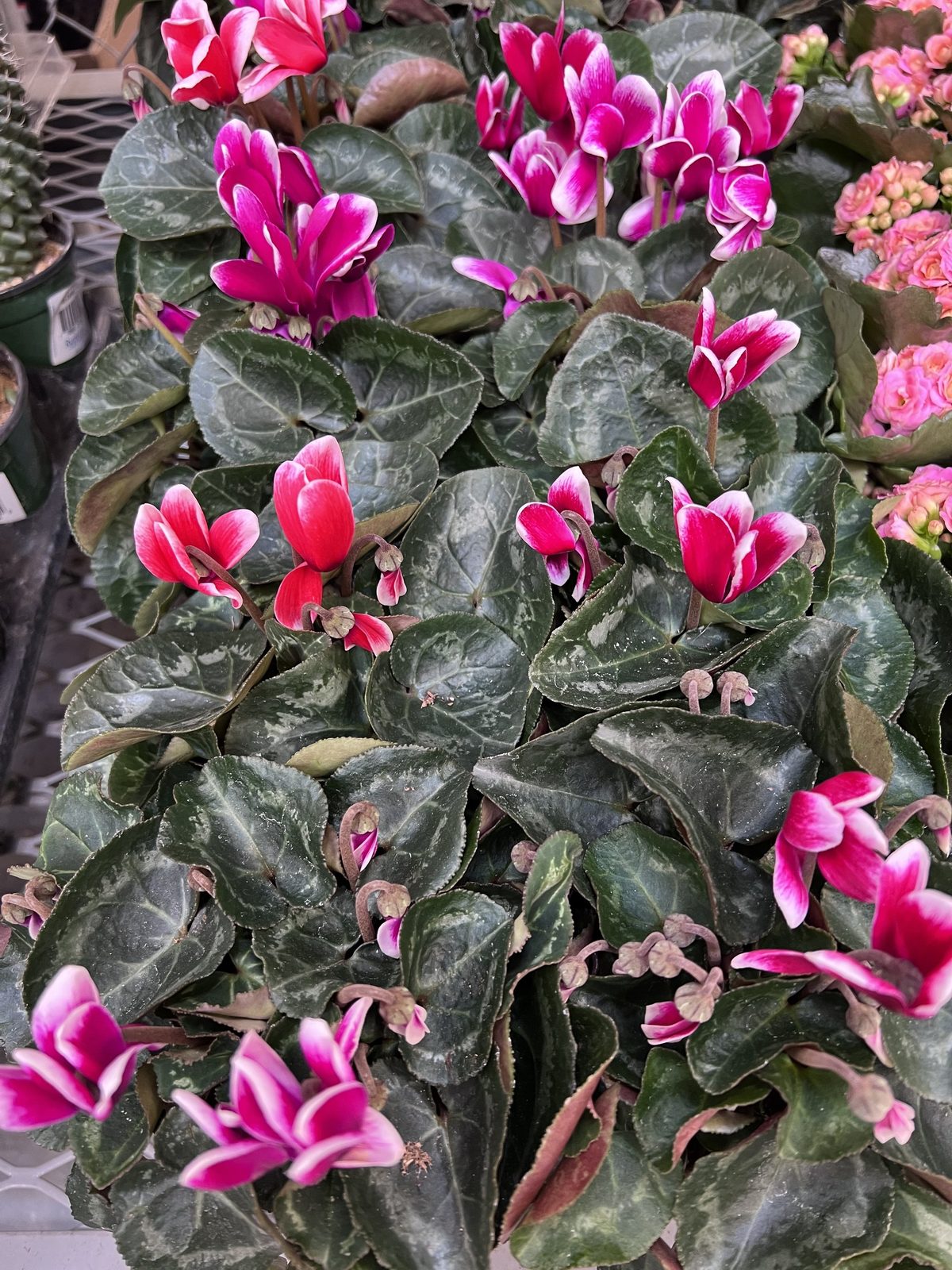
Light
Give it bright, indirect light, such as an east window. Direct afternoon sun scorches the leaves.
Water
Cyclamen grows from a round tuber that sits at the soil surface. Water on the tuber rots it.
Water from below. Set the pot in a bowl of water for 15 to 20 minutes, then let it drain. Read how to bottom water houseplants step by step. Water when the top of the soil feels dry.
A thirsty cyclamen wilts. Soggy soil rots the tuber. Read how to tell if a houseplant is overwatered or underwatered.
Soil and potting
Use a well-draining houseplant mix. Keep the top half of the tuber above the soil.
Repot in late summer, as it wakes from its rest, only if it has filled its pot. See how to repot a houseplant step by step.
Humidity and temperature
Cool is the key. Keep it between 10 and 18°C (50 and 65°F), with cooler nights. A cool bedroom, an entry, or a bright windowsill away from the furnace works.
In a warm room, the leaves yellow and the flowers fade fast.
Feeding
Feed every two weeks while it blooms with a balanced liquid fertilizer at half strength. Stop when the leaves start to yellow in spring.
Pruning
Remove faded flowers and yellow leaves by twisting and pulling the whole stem from the tuber. Cut stems left behind can rot.
Summer dormancy
In spring, the leaves yellow and die back. This is normal. Cyclamen rests through the summer.
- Stop feeding and water less as the leaves yellow.
- Once they are gone, set the pot on its side in a cool, shaded spot and keep it almost dry.
- In late summer or early fall, when new leaves start, bring it back to bright light and start watering again.
Propagation
Cyclamen grows from seed. Tubers do not split well. Most people buy new plants or carry their old one through its summer rest.
Problems
| What you see | Most likely cause |
|---|---|
| Yellow leaves in spring | Normal. It is going dormant. |
| Yellow leaves in winter | Room too warm, or too much water |
| Flowers fade fast | Room too warm |
| Wilting | Thirsty, or a rotting tuber |
| Soft, mushy tuber | Rot from water on the tuber |
| Gray fuzz on stems | Gray mold. Remove it and improve airflow. |
Pests
Cyclamen mites make new leaves curl, twist, and stunt. Toss a plant with them. Aphids, mealybugs, and fungus gnats can also show up. Read how to get rid of fungus gnats in houseplants.
Pet safety
The ASPCA lists cyclamen as toxic to cats and dogs. The tuber is the most toxic part. Eating it can cause drooling, vomiting, and diarrhea. Large amounts can affect the heart. Keep it out of reach, and keep pets from digging in the pot.
Varieties
- Standard cyclamen has large flowers on tall stems.
- Mini cyclamen has small flowers and is often scented.
- Ruffled and fringed types have frilly petal edges.
- Picotee types have white petals edged in pink or red.