Tropical hibiscus care guide
Hibiscus rosa-sinensis, also called Chinese hibiscus, rose of China, hibiscus
Published 2022-07-28
Quick care
- Light
- Bright direct
- Water
- When the top 2 to 3 cm (1 in) of soil is dry
- Humidity
- Average room air is fine. Dry air invites spider mites.
- Temperature
- 16 to 29°C (60 to 85°F). Keep above 10°C (50°F).
- Soil
- Rich, well-draining potting mix
- Feeding
- Hibiscus or balanced fertilizer every two weeks in spring and summer
- Pets
- Not listed as toxic. Eating it can upset a pet's stomach.
- Difficulty
- Moderate
- Mature size
- 1 to 2 m (3 to 6 ft) tall in a pot
- Propagation
- Stem cuttings in summer
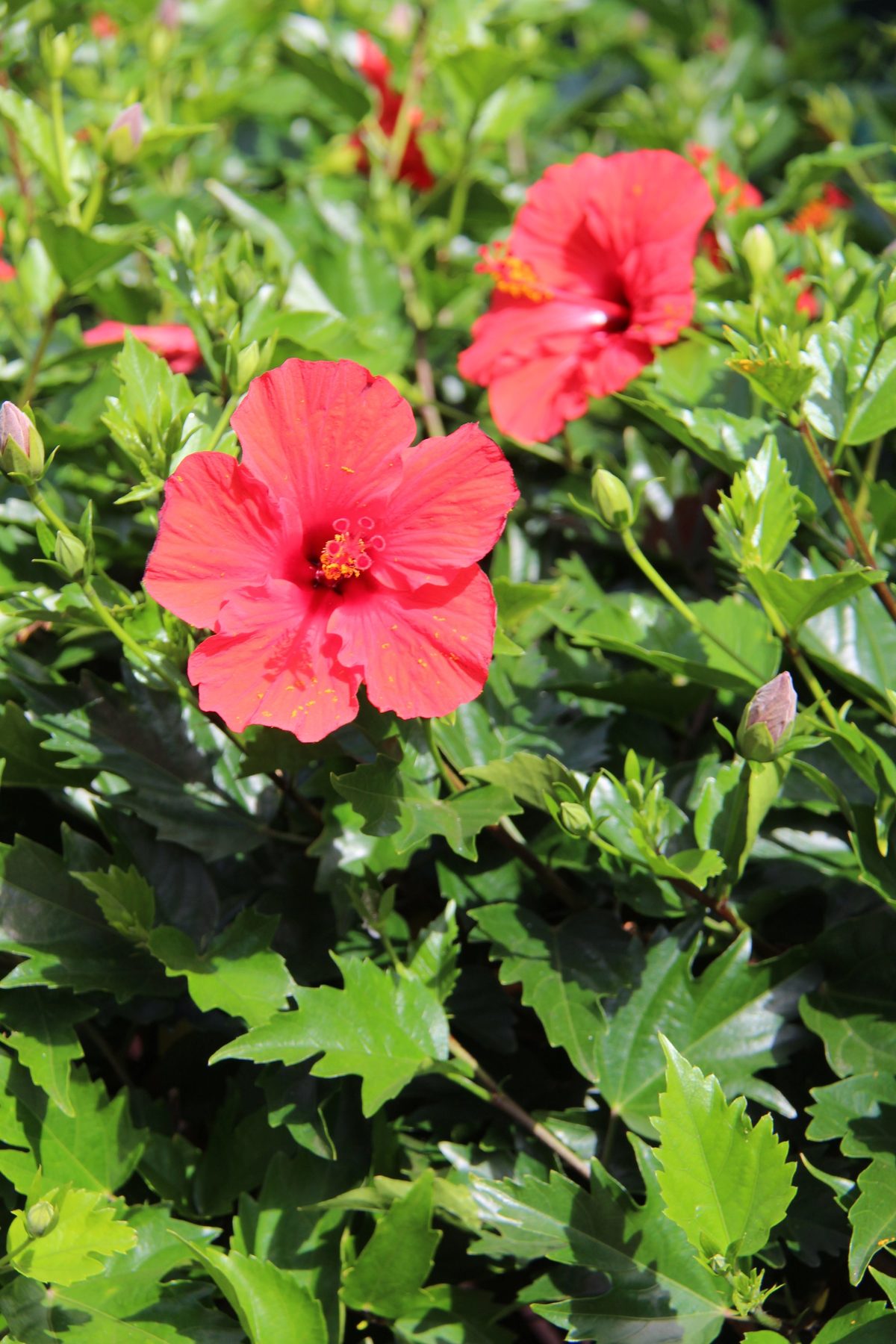
Tropical hibiscus has glossy leaves and huge, bright flowers in red, pink, orange, yellow, and peach. Each flower lasts a day or two, but a happy plant opens new ones all summer. In a cold climate, it spends summer on the deck and winter indoors.
Tropical hibiscus is not the hardy hibiscus or rose of Sharon grown outside in Canadian gardens. Those have different care.
Light
Give it your sunniest spot. Indoors, a south or west window. Outside in summer, full sun or bright morning sun.
In low light, it stops blooming, drops buds, and yellows its leaves.
Water
Water when the top 2 to 3 cm (1 in) of soil is dry. Water until it drains, then empty the saucer. In summer heat outside, that may be every day.
Both drying out and soggy soil make it drop buds and yellow its leaves. Read how to tell if a houseplant is overwatered or underwatered.
Soil and potting
Use a rich, well-draining potting mix. Repot every year or two in spring, one size up. See how to repot a houseplant step by step.
Humidity and temperature
Average room air is fine. Keep it between 16 and 29°C (60 and 85°F). It can go outside once nights stay above 10°C (50°F).
Feeding
Hibiscus is hungry. Feed every two weeks in spring and summer with a fertilizer made for hibiscus or a balanced liquid fertilizer. Feed less in winter.
Pruning
Prune in late winter or early spring, before it goes outside. Cut stems back by up to a third, just above a leaf. Flowers grow on new growth, so pruning means more flowers.
Bringing it in for winter
- Before nights drop below 10°C (50°F), check it for pests. Rinse the leaves with a hose.
- Bring it in to your sunniest window.
- Expect yellow leaves and dropped buds for a few weeks as it adjusts to less light.
- Water less and stop feeding until spring.
In spring, harden it off. Set it in shade for a week before moving it to full sun.
Propagation
Take a stem cutting 10 to 15 cm (4 to 6 in) long in summer. Remove the lower leaves, dip the end in rooting hormone, and set it in damp mix. Cover it to hold humidity. Roots grow in four to eight weeks.
Problems
| What you see | Most likely cause |
|---|---|
| Buds drop before opening | A move, dry soil, low light, or cold |
| Yellow leaves | Adjusting to a move, too much or too little water, or hungry |
| No flowers | Not enough sun, or no pruning |
| Speckled leaves with fine webbing | Spider mites |
| Sticky leaves and tiny white flies | Whiteflies or aphids |
Pests
Spider mites, whiteflies, and aphids love hibiscus, above all indoors in winter. Check under the leaves every week. Rinse the plant in the shower, and treat with insecticidal soap if needed.
Pet safety
The ASPCA does not list tropical hibiscus as toxic. Most vet sources consider it non-toxic, though a pet that eats a lot can get vomiting or diarrhea. Rose of Sharon, an outdoor hibiscus, is a different plant.
Varieties
- Single-flowered types have five wide petals and a long center column.
- Double-flowered types have ruffled, layered petals.
- Flowers come in red, pink, orange, yellow, peach, and mixed colors.
- Tree-form hibiscus is trained on a single trunk with a round head.