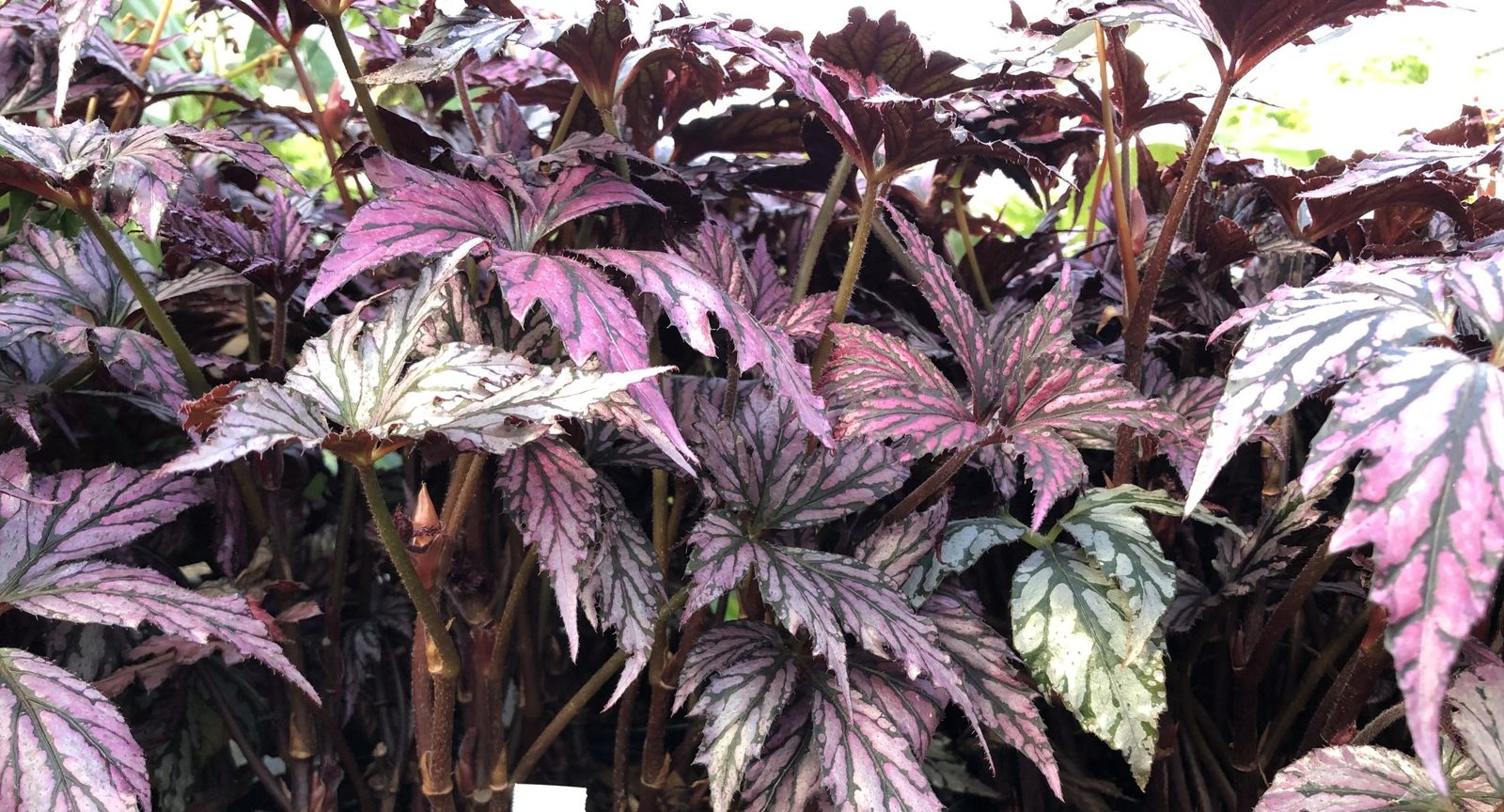
The best houseplants with colorful leaves are croton, rex begonia, calathea, stromanthe, Chinese evergreen, and polka dot plant. Their leaves come in red, pink, purple, silver, yellow, and cream, and the color lasts all year. Most need bright indirect light to hold it. In low light the colors fade and new leaves come in green.
Colorful leaves give more show than flowers do, because they do not come and go. The trade-off is that many of these plants want more light and more humidity than plain green ones.
I earn a commission when you buy through links to Amazon. It costs you nothing extra.
The 14 plants at a glance
| Plant | Colors | Light | Pet safe |
|---|---|---|---|
| Croton | Red, orange, yellow, green | Bright, some direct sun | No |
| Rex begonia | Silver, pink, red, purple, near-black | Bright indirect | No |
| Calathea | Green, cream, pink, purple undersides | Medium indirect | Yes |
| Stromanthe ‘Triostar’ | Green, cream, pink | Bright indirect | Yes |
| Prayer plant | Green with red veins | Medium indirect | Yes |
| Chinese evergreen | Pink, red, silver, green | Low to bright indirect | No |
| Polka dot plant | Pink, red, or white spots | Bright indirect | Yes |
| Nerve plant | Green with white, pink, or red veins | Medium indirect | Yes |
| Caladium | Pink, red, white, green | Bright indirect | No |
| Tradescantia | Purple, silver, pink | Bright indirect | No |
| Purple passion | Green with purple hairs | Bright indirect | Yes |
| Persian shield | Purple with a silver sheen | Bright indirect | Yes |
| Ti plant | Burgundy, hot pink, red | Bright indirect | No |
| Purple shamrock | Deep purple | Bright indirect | No |
Bold, multi-color leaves
Croton
Croton (Codiaeum variegatum) has the loudest leaves of any houseplant. One plant carries red, orange, yellow, and green at once. It needs a few hours of direct sun and drops leaves when moved or chilled. It is toxic to cats and dogs.
Rex begonia
Rex begonia (Begonia rex-cultorum) has leaves in swirls of silver, pink, burgundy, and purple. It likes humid air and soil that dries a little at the top. Water the soil, not the leaves, to avoid powdery mildew. It is toxic to cats and dogs.
Caladium
Caladium (Caladium bicolor) has paper-thin, heart-shaped leaves in pink, red, and white. It grows from a tuber and rests in winter. The leaves die back in fall and return in spring. It is toxic to cats and dogs.
Ti plant
Ti plant (Cordyline fruticosa) has long leaves in burgundy, hot pink, and red. Use rainwater or distilled water, because fluoride browns the tips. It is toxic to cats and dogs.
Patterned leaves
Calathea
Calathea leaves look painted. Rattlesnake plant has dark spots on wavy green leaves. Pinstripe calathea has thin pink lines. Many have purple undersides. They need humid air and soft water. They are safe for cats and dogs.
Stromanthe ‘Triostar’
Stromanthe (Stromanthe sanguinea ‘Triostar’) has leaves splashed with green, cream, and pink, with pink-red undersides. It folds its leaves up at night. It is safe for cats and dogs.
Prayer plant
Prayer plant (Maranta leuconeura) has soft green leaves with bright red veins and pale centers. It stays low and trails over the pot edge. It is safe for cats and dogs. To sort these three, see calathea vs maranta.
Chinese evergreen
Chinese evergreen (Aglaonema) is the easiest colorful plant. Newer types come in pink and red, and older types in silver and green. It is the best pick for lower light, though pink types need more. It is toxic to cats and dogs.
Small plants with spots and veins
Polka dot plant
Polka dot plant (Hypoestes phyllostachya) has green leaves covered in pink, red, or white spots. Pinch the stem tips often to keep it bushy. It is safe for cats and dogs.
Nerve plant
Nerve plant (Fittonia albivenis) has a net of bright veins on small leaves. It collapses when dry and recovers after watering. It is safe for cats and dogs.
Purple leaves
Tradescantia
Tradescantia (Tradescantia zebrina) has trailing stems with purple and silver stripes. It grows fast and roots from any cut piece. It is toxic to cats and dogs, and the sap can irritate skin.
Purple passion
Purple passion (Gynura aurantiaca) has green leaves covered in soft purple hairs that glow in bright light. Keep water off the fuzzy leaves. It is safe for cats and dogs.
Persian shield
Persian shield (Strobilanthes dyerianus) has purple leaves with a metallic silver sheen. It needs warmth and humid air, and it gets leggy with age, so pinch it and root new cuttings. It is safe for cats and dogs.
Purple shamrock
Purple shamrock (Oxalis triangularis) has deep purple, three-part leaves that fold at night. It grows from small bulbs and may rest for a few weeks. It is toxic to cats and dogs.
Where leaf color comes from
- Green is chlorophyll, which the plant uses to make food from light.
- Red, pink, and purple are anthocyanins. Many plants make more of them in strong light.
- Yellow and orange are carotenoids.
- White and cream patches have no pigment at all. They make no food, so the green parts do all the work.
- Silver is often a thin layer of air under the leaf surface that reflects light.
This explains why colorful plants need more light. A leaf with less green has less power to feed the plant.
How to keep the color
- Give bright indirect light. Put the plant within 60 to 90 cm (2 to 3 ft) of an east or west window.
- Add light in winter. Short days fade color. A full-spectrum LED grow light for 10 to 12 hours a day holds it. See how to choose a grow light.
- Keep hot sun off thin leaves. Caladium, calathea, and begonia scorch in direct afternoon sun.
- Raise the humidity. Furnace-dry air browns the edges of calathea, stromanthe, and begonia. A cool mist humidifier helps. See how to increase humidity in winter.
- Feed lightly. Too much nitrogen pushes plain green growth.
- Cut out all-green stems. On a variegated plant, a green stem grows faster and takes over.
Why color fades
| What you see | Likely cause | Fix |
|---|---|---|
| New leaves are green or dull | Not enough light | Move closer to the window or add a grow light |
| Bleached or tan patches | Too much direct sun | Move back or add a sheer curtain |
| Brown, crispy edges | Dry air or minerals in tap water | Raise humidity, use rainwater or filtered water |
| One stem is all green | Reverting | Cut that stem back to a colored leaf |
| Whole plant is pale | Hungry, or old soil | Feed at half strength in spring and summer |
More on green takeovers is in why variegated houseplants turn green.
Where to go next
For lists by color, see pink houseplants, purple houseplants, and indoor plants with red leaves.
For a first colorful plant, pick a Chinese evergreen for a dim room or a polka dot plant for a bright one. For a home with pets, choose from calathea, stromanthe, prayer plant, polka dot plant, nerve plant, purple passion, and Persian shield. If a pet eats a toxic plant, call your vet or the ASPCA Animal Poison Control Center.