Echeveria care guide
Echeveria, also called Mexican snowball, painted lady, Mexican hens and chicks
Published 2022-06-16
Quick care
- Light
- Bright direct
- Water
- When the soil is dry all the way down
- Humidity
- Dry room air is fine
- Temperature
- 13 to 27°C (55 to 80°F). Keep above 7°C (45°F).
- Soil
- Cactus and succulent mix with extra grit
- Feeding
- Half-strength cactus fertilizer once or twice in spring and summer
- Pets
- Non-toxic to cats and dogs
- Difficulty
- Moderate
- Mature size
- 5 to 20 cm (2 to 8 in) wide
- Propagation
- Leaf cuttings or offsets
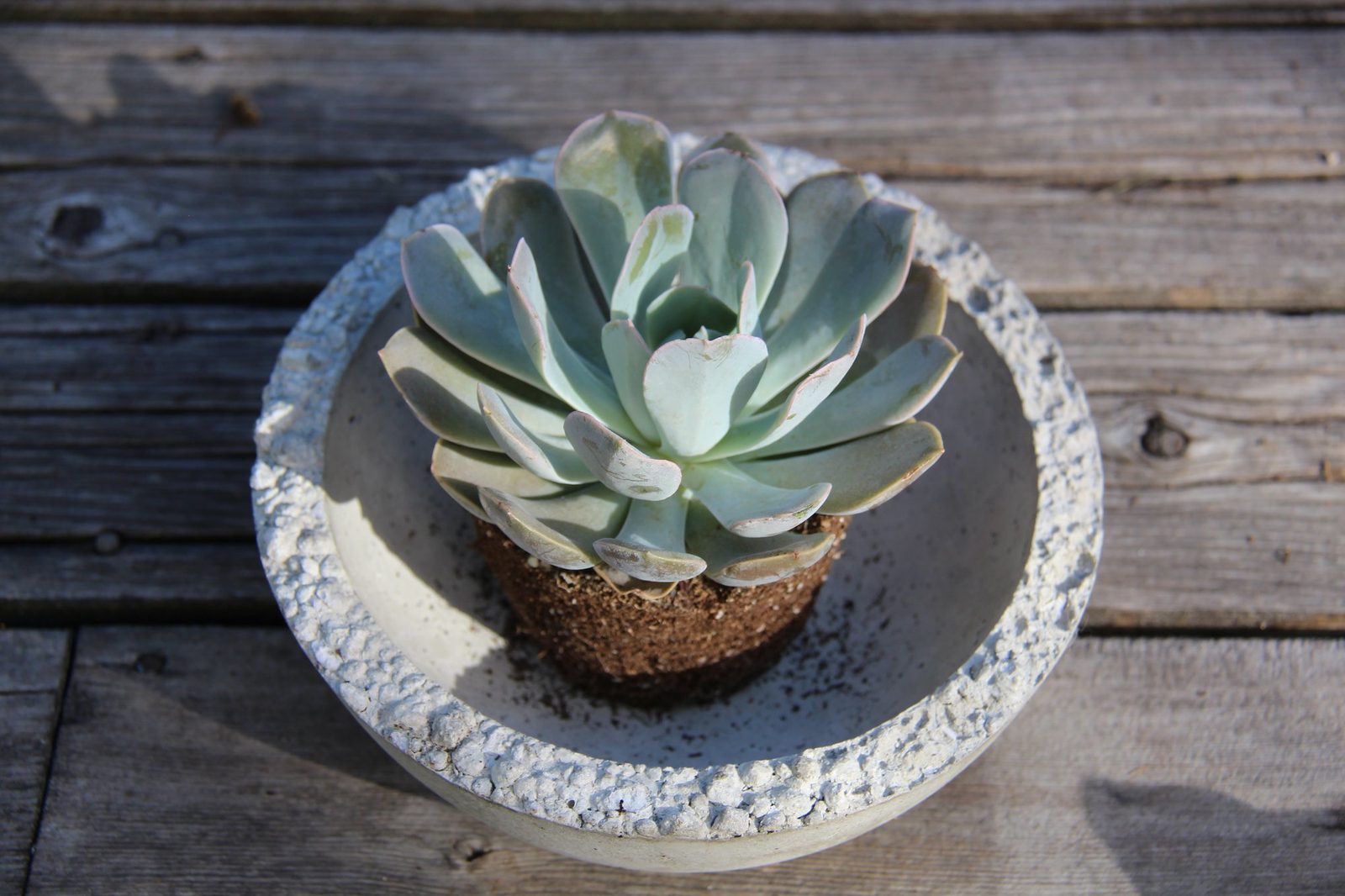
Echeverias are the rose-shaped succulents in blue, gray, pink, and purple that fill every garden center. They are easy to keep alive and hard to keep pretty indoors. The trick is light. Without strong sun, they stretch.
Echeverias cannot handle frost. The hardy outdoor “hens and chicks” are a different plant, Sempervivum.
Light
Give echeveria your sunniest window. A south or west window is best. Four or more hours of direct sun keeps it tight and colorful.
In low light, the center stretches up, the leaves space out, and the rosette loses its shape. This is called etiolation, and it does not reverse. A grow light helps in a dim home or a Canadian winter.
A plant moved outside for summer needs a week in shade first, or it sunburns.
Water
Water when the soil is dry all the way down. Water until it drains, then empty the saucer. Pour water on the soil, not into the rosette.
In spring and summer, that is often every two weeks. In winter, it can be once a month. Soft, mushy, or see-through leaves mean too much water. Wrinkled, thin leaves mean too little. Read how to tell if a houseplant is overwatered or underwatered.
Soil and potting
Use cactus and succulent mix with extra perlite or pumice. A shallow terracotta pot with a drainage hole is ideal.
Repot every two years in spring. See how to repot a houseplant step by step.
Humidity and temperature
Dry indoor air is fine. Keep it between 13 and 27°C (55 and 80°F). Cool nights bring out pink and red tones.
Feeding
Feed once or twice in spring and summer with a cactus fertilizer at half strength. Skip fall and winter.
The powdery coating
Many echeverias wear a white or blue powder called farina. It protects the leaves from sun. Touching or wiping it leaves marks that do not heal. Handle the plant by the pot.
Pruning
Pull off dry, dead lower leaves. They can hide pests. If a plant has stretched, cut the rosette off with a few centimeters of stem, let it dry for a few days, and replant it. The old stem often sprouts new rosettes.
Propagation
- Leaves. Twist off a healthy lower leaf whole. Let it dry for a few days. Lay it on dry cactus mix in bright, indirect light. Roots and a tiny rosette grow in a few weeks. Mist the soil now and then.
- Offsets. Many echeverias grow small rosettes around the base. Cut one free and pot it up.
Problems
| What you see | Most likely cause |
|---|---|
| Center stretches up, leaves spread out | Not enough light |
| Soft, mushy, see-through leaves | Too much water |
| Wrinkled, thin lower leaves | Too dry, or normal aging |
| Brown, dry patches | Sunburn after a sudden move into sun |
| Marks on the powdery coating | Fingers or water. It does not wipe off. |
| Rot in the center | Water sitting in the rosette |
Pests
Mealybugs hide between the leaves and on the roots. Dab them with rubbing alcohol on a cotton swab. Fungus gnats mean the soil stays wet too long. Read how to get rid of fungus gnats in houseplants.
Pet safety
The ASPCA lists echeveria as non-toxic to cats and dogs.
Varieties
- ‘Perle von Nürnberg’ has pink and lavender leaves.
- Mexican snowball, Echeveria elegans, has pale blue rosettes that make lots of offsets.
- ‘Lola’ has pale, pearly lavender leaves.
- ‘Black Prince’ has near-black leaves.
- ‘Topsy Turvy’ has leaves that curl up and inward.
- Echeveria agavoides has stiff, pointed leaves with red tips.