Zebra haworthia care guide
Haworthiopsis attenuata, also called zebra plant, haworthia, Haworthia attenuata
Published 2022-06-12
Quick care
- Light
- Bright indirect
- Water
- When the soil is dry all the way down
- Humidity
- Dry room air is fine
- Temperature
- 13 to 27°C (55 to 80°F). Keep above 7°C (45°F).
- Soil
- Cactus and succulent mix with extra grit
- Feeding
- Half-strength cactus fertilizer once or twice in spring and summer
- Pets
- Non-toxic to cats and dogs
- Difficulty
- Easy
- Mature size
- 10 to 15 cm (4 to 6 in) tall
- Propagation
- Pot up the pups that grow around the base
Zebra haworthia is a small, spiky succulent with white stripes across dark green leaves. It handles less light than most succulents, which makes it one of the best for a windowsill indoors. It is slow, tidy, and safe for pets.
Botanists now call it Haworthiopsis attenuata. Stores often still say haworthia.
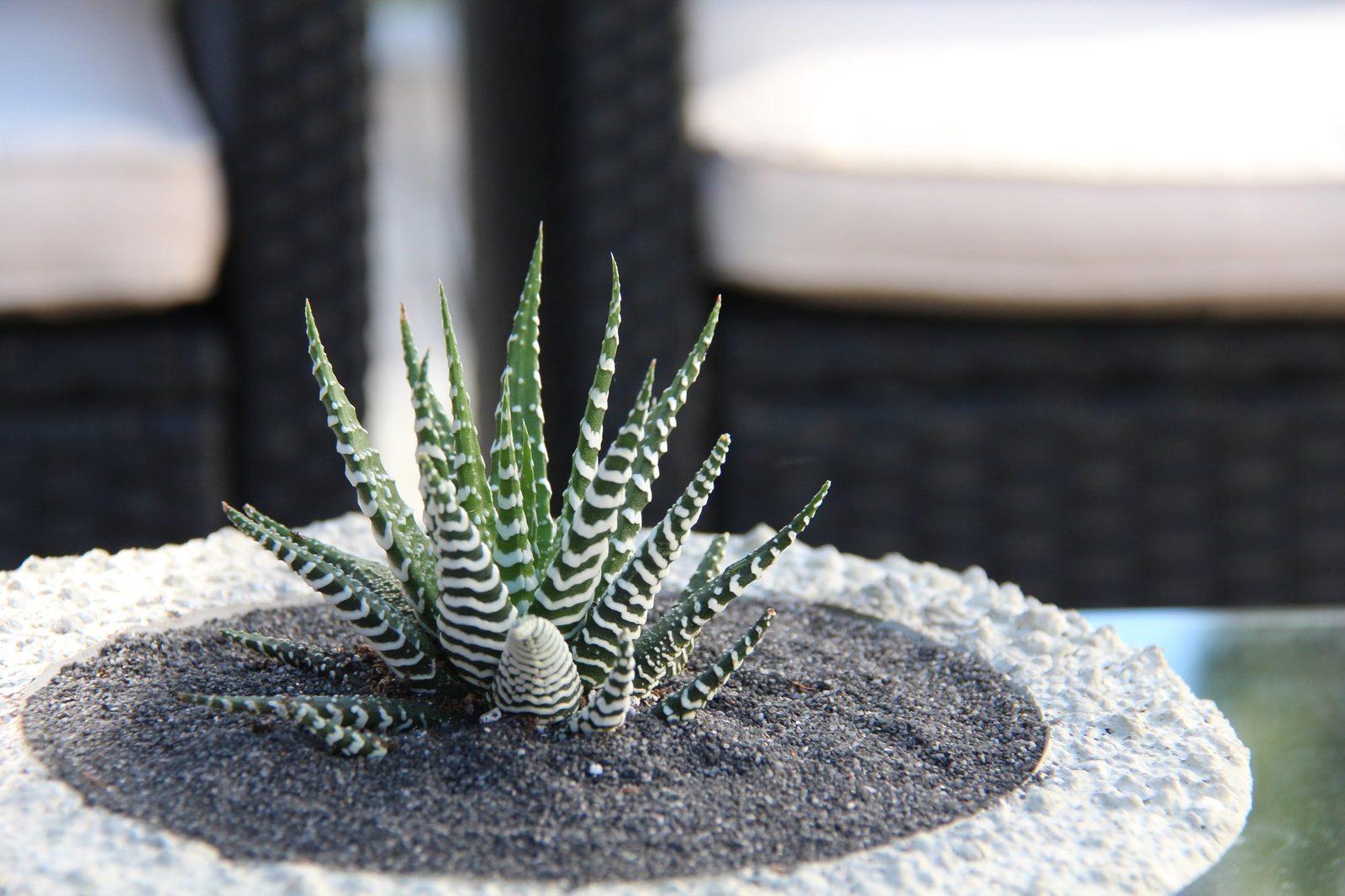
Light
Give it bright, indirect light, such as an east window or a spot near a south or west window. Unlike most succulents, it does well without hours of direct sun.
Too much hot sun turns the leaves red, orange, or brown. Too little light makes it stretch and pale.
Water
Water when the soil is dry all the way down. Water until it drains, then empty the saucer.
In spring and summer, that is often every two to three weeks. In winter, it can be once a month or less. Soft, mushy, or see-through leaves mean too much water. Thin, curled leaves mean too little. Read how to tell if a houseplant is overwatered or underwatered.
Soil and potting
Use cactus and succulent mix with extra perlite, pumice, or grit. A small terracotta pot with a drainage hole is ideal.
It grows slow and likes a snug pot. Repot every two to three years in spring, or when pups crowd the pot. See how to repot a houseplant step by step.
Humidity and temperature
Dry indoor air is fine. Keep it between 13 and 27°C (55 and 80°F). Keep leaves off cold glass in winter.
Feeding
Feed once or twice in spring and summer with a cactus fertilizer at half strength. Skip fall and winter.
Pruning
Pull off dry, dead lower leaves. Older plants sometimes send up a tall, thin flower stalk with small white flowers. Cut it off at the base once the flowers fade.
Propagation
Zebra haworthia makes pups, small plants around the base.
- In spring, ease the plant out of its pot.
- Pull or cut a pup free with some roots attached.
- Let it dry for a day.
- Pot it in dry cactus mix and wait a week before the first watering.
Problems
| What you see | Most likely cause |
|---|---|
| Soft, mushy, see-through leaves | Too much water |
| Thin, curled leaves | Too dry |
| Red, orange, or brown leaves | Too much direct sun |
| Pale, stretched plant | Not enough light |
| Dry, dead lower leaves | Normal aging |
| Black, soft base | Root rot |
Pests
Mealybugs can hide deep between the leaves. Dab them with rubbing alcohol on a cotton swab. Fungus gnats mean the soil stays wet too long. Read how to get rid of fungus gnats in houseplants.
Pet safety
The ASPCA lists zebra haworthia as non-toxic to cats and dogs. It looks a bit like aloe, but aloe is toxic. Check the label.
Varieties
- Zebra haworthia has raised white stripes on dark green leaves.
- Haworthiopsis fasciata looks almost the same, but the inner face of each leaf is smooth.
- ‘Big Band’ is a fasciata with thick, bold white bands.
- Window haworthias have fat, see-through leaf tips that let light in.