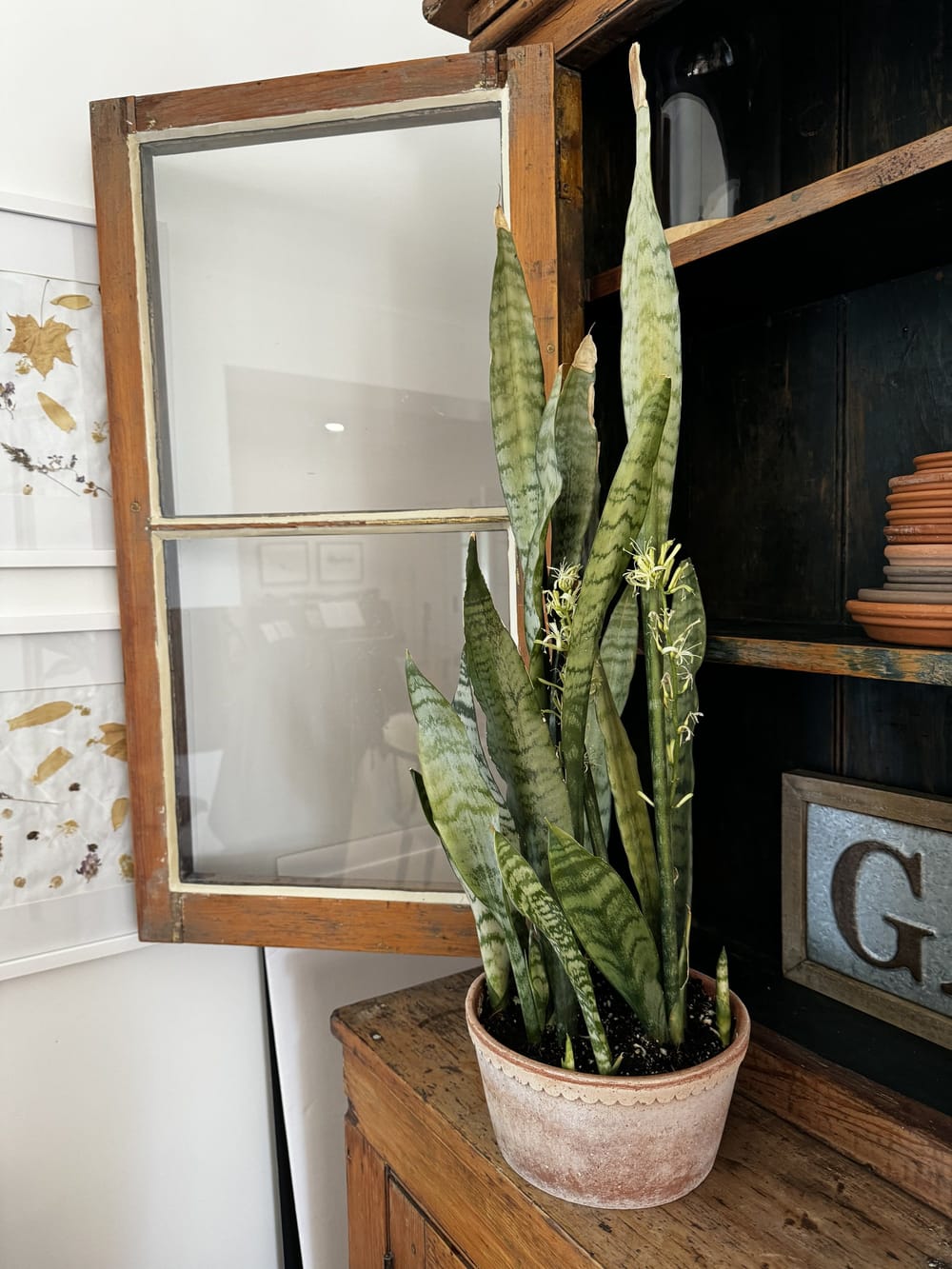
Snake plant care guide
Dracaena trifasciata, also called mother-in-law's tongue, sansevieria
Published 2026-10-19
Quick care
- Light
- Low
- Water
- When the soil is dry all the way down
- Humidity
- Dry room air is fine
- Temperature
- 15 to 29°C (60 to 85°F). Keep above 10°C (50°F).
- Soil
- Cactus and succulent mix
- Feeding
- Half-strength fertilizer two or three times in spring and summer
- Pets
- Mildly toxic to cats and dogs if chewed
- Difficulty
- Easy
- Mature size
- Leaves 60 to 120 cm (2 to 4 ft) tall
- Propagation
- Division or leaf cuttings
The snake plant is the hardest houseplant to kill by neglect. It is easy to kill with kindness. Almost every dead snake plant drowned.
Light
Snake plants grow in low light, and that is why so many sit in dim corners. They grow faster and stay upright in bright, indirect light.
A plant in low light needs much less water. A plant moved from a dim corner to a sunny window needs a week or two to adjust, or the leaves can scorch.
Water
Water only when the soil is dry all the way down. Push a finger or a wooden skewer to the bottom of the pot. If it comes out clean and dry, water.
In most homes that means every two to four weeks in summer and every four to eight weeks in winter. Water around the leaves, not into the center of the rosette. Read how to tell if a houseplant is overwatered or underwatered.
Soil and potting
Use a cactus and succulent mix, or mix regular potting soil half and half with perlite. Terracotta pots help the soil dry faster.
Snake plants like a snug pot. Repot when roots crack or bulge the pot, usually every two to three years. See how to repot a houseplant step by step.
Humidity and temperature
Dry indoor air is fine. Keep the plant away from cold windows in winter. Cold and wet together cause rot fast.
Feeding
Feed two or three times in spring and summer with a balanced fertilizer at half strength. Skip it the rest of the year.
Pruning
There is little to prune. Cut a damaged leaf off at the soil line with a clean knife.
Propagation
Division is the fastest way. Slide the plant out of its pot and cut or pull the rhizome apart so each piece has leaves and roots. Pot each piece on its own.
Leaf cuttings also work, but slowly. Cut a leaf into 8 cm (3 in) pieces, let them dry for a day, and push the bottom end into damp soil. Roots and a new pup can take two to three months. Pups from cuttings of yellow-edged types often grow plain green.
Problems
| What you see | Most likely cause |
|---|---|
| Mushy leaves at the base | Root rot from too much water |
| Leaves falling over | Too much water or not enough light |
| Wrinkled, thin leaves | Too little water |
| Brown, dry tips | Uneven watering or damage |
| No new growth | Normal in winter or low light |
Pests
Pests are rare. Mealybugs hide where the leaves meet the soil. Fungus gnats mean the soil stays wet too long. Read how to get rid of fungus gnats in houseplants.
Pet safety
Snake plants are mildly toxic to cats and dogs. Chewing the leaves can cause drooling, vomiting, and diarrhea. Most pets leave the stiff leaves alone.
Varieties
- ‘Laurentii’ has yellow edges on tall leaves.
- ‘Hahnii’ is a short bird’s nest type.
- ‘Moonshine’ has pale silver-green leaves.
- ‘Black Gold’ has dark leaves with narrow gold edges.
- Cylindrical snake plant (Dracaena angolensis) has round, spear-like leaves.
In my house
I have lots of snake plants. In summer I carry them outside so they get more light, then bring them back in before the nights turn cold. Move them into the sun slowly, over a week or two, so the leaves do not scorch.