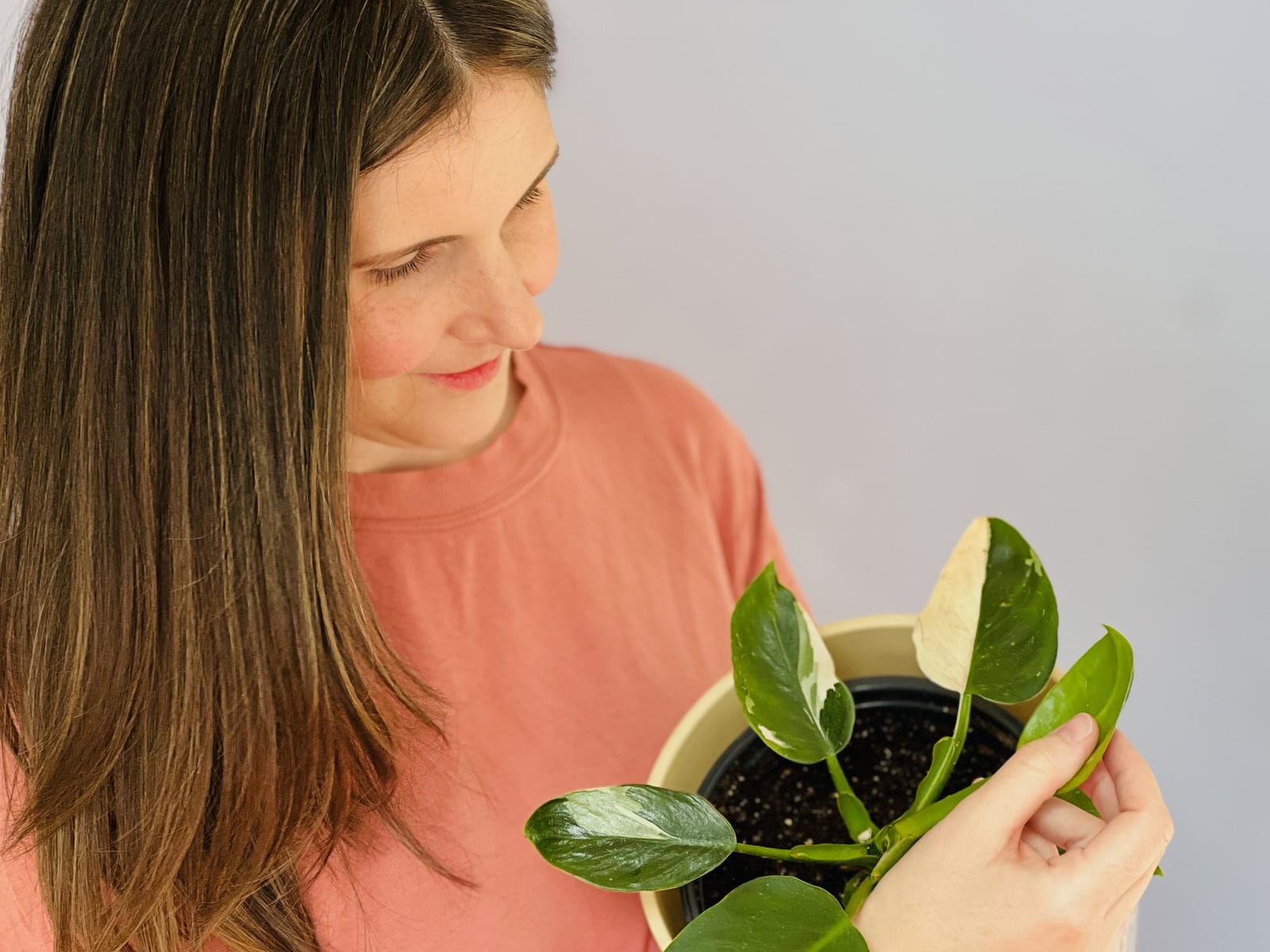
Pothos care guide
Epipremnum aureum, also called golden pothos, devil's ivy
Published 2026-10-19
Quick care
- Light
- Bright indirect
- Water
- When the top 5 cm (2 in) of soil is dry
- Humidity
- Average room air is fine
- Temperature
- 18 to 29°C (65 to 85°F). Keep above 10°C (50°F).
- Soil
- Any well-draining houseplant mix
- Feeding
- Balanced liquid fertilizer, monthly in spring and summer
- Pets
- Toxic to cats and dogs if chewed
- Difficulty
- Easy
- Mature size
- Vines 2 to 3 m (6 to 10 ft) indoors
- Propagation
- Stem cuttings in water or soil
Pothos is the plant most people start with, and for good reason. It forgives missed waterings, grows in most rooms, and roots in a glass of water.
Light
Pothos grows best in bright, indirect light. A spot a few feet back from an east or west window is ideal.
It survives in low light, but it grows slowly and the leaves get smaller. Variegated types like ‘Marble Queen’ lose their cream streaks in low light. Hot afternoon sun through glass scorches the leaves.
Water
Water when the top 5 cm (2 in) of soil is dry. Water until it runs out the drainage holes, then empty the saucer.
Drooping leaves usually mean the plant is thirsty. They perk up within a day of watering. Yellow leaves and wet soil mean too much water. Read how to tell if a houseplant is overwatered or underwatered if you are not sure which it is.
Soil and potting
Any good houseplant mix works. Add a handful of perlite or orchid bark if your mix stays wet for more than a week.
Use a pot with a drainage hole. Pothos is happy a little snug, so move up only one pot size at a time. See how to repot a houseplant step by step.
Humidity and temperature
Normal room air is fine. Keep the plant away from cold drafts and heating vents. Leaves get damaged below about 10°C (50°F).
Feeding
Feed once a month in spring and summer with a balanced liquid fertilizer at half strength. Skip it in fall and winter, when growth slows.
Pruning
Trim long, bare vines just above a leaf. New growth sprouts near the cut, and the plant gets fuller. Every cutting can become a new plant.
Propagation
Cut a piece of vine with at least one node. A node is the bump where a leaf meets the stem. Roots grow from the node.
Put the cutting in water or moist soil. Roots show up in two to four weeks. Pot water-rooted cuttings once the roots are a few centimeters long.
Problems
| What you see | Most likely cause |
|---|---|
| Yellow leaves, wet soil | Too much water |
| Drooping, dry soil | Too little water |
| Brown crispy patches | Too much direct sun |
| Small leaves, long gaps between them | Not enough light |
| Variegation fading | Not enough light |
Pests
Pothos rarely gets pests. Mealybugs, spider mites, and fungus gnats show up now and then. Fungus gnats point to soil that stays wet. Read how to get rid of fungus gnats in houseplants.
Pet safety
Pothos is toxic to cats and dogs. Chewing the leaves irritates the mouth and can cause drooling and vomiting. Keep it on a high shelf or in a hanging pot if your pets chew plants.
Varieties
- ‘Golden’ has green leaves splashed with yellow.
- ‘Marble Queen’ has heavy cream and white streaks.
- ‘Neon’ has bright chartreuse leaves.
- ‘Manjula’ has wide, wavy leaves with cream patches.
- ‘Global Green’ has two shades of green.
In my house
I have a few pothos plants, and I have had them for years. They are easy. They have never come close to dying, and they have never gone wild on me either. They just keep growing, slow and steady.