Spider plant care guide
Chlorophytum comosum, also called airplane plant, ribbon plant
Published 2026-10-19
Quick care
- Light
- Bright indirect
- Water
- When the top 2 to 3 cm (1 in) of soil is dry
- Humidity
- Average room air is fine
- Temperature
- 15 to 27°C (60 to 80°F). Keep above 7°C (45°F).
- Soil
- Any well-draining houseplant mix
- Feeding
- Balanced liquid fertilizer, monthly in spring and summer
- Pets
- Non-toxic to cats and dogs
- Difficulty
- Easy
- Mature size
- 30 to 60 cm (1 to 2 ft) wide, with trailing runners
- Propagation
- Root the babies in water or soil
The spider plant grows fast, forgives a lot, and makes babies you can give away. It is also one of the few common houseplants that is safe for cats and dogs.
Light
Spider plants grow best in bright, indirect light. They handle medium light, but the stripes fade and the plant makes fewer babies.
Hot direct sun scorches the leaves.
Water
Water when the top 2 to 3 cm (1 in) of soil is dry. Spider plants store water in thick white roots, so a missed watering does little harm.
Soggy soil causes root rot. Read how to tell if a houseplant is overwatered or underwatered.
Soil and potting
Any good houseplant mix works. The roots fill a pot fast and can push the plant up out of the soil.
Repot once a year or when roots circle the pot. A slightly snug pot makes more babies. See how to repot a houseplant step by step.
Humidity and temperature
Average room air is fine. Very dry air can add to brown tips.
Feeding
Feed monthly in spring and summer with a balanced liquid fertilizer at half strength. Too much fertilizer causes brown tips.
Pruning
Trim brown tips with clean scissors. Cut at an angle to keep the natural leaf shape. Snip off runners if you want the mother plant to put its energy into leaves.
Propagation
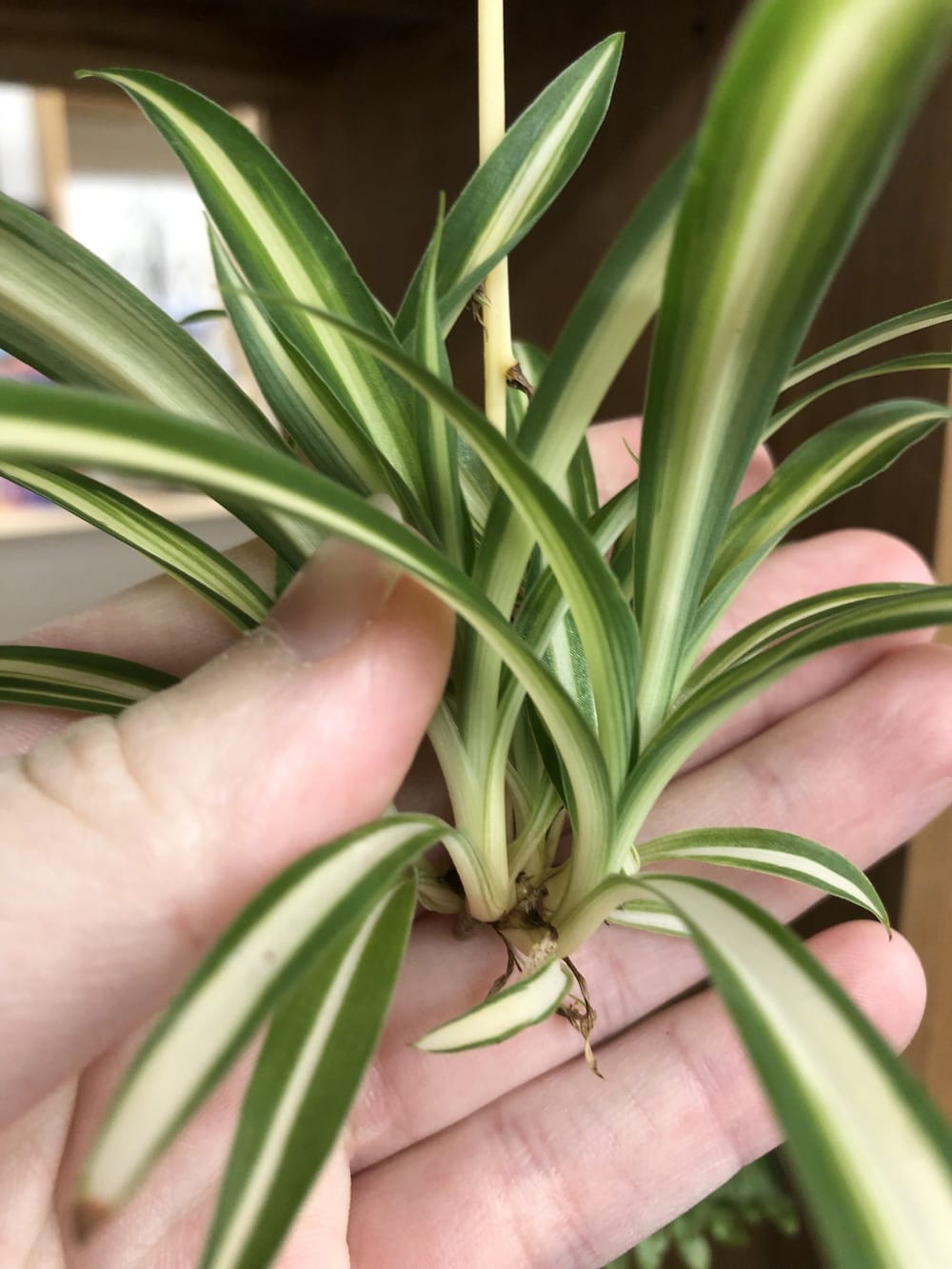
The babies, called plantlets, hang from long runners. Each one already has small roots started.
Snip a baby off and set its base in water or moist soil. Or pin it into a pot of soil next to the mother while it is still attached, then cut the runner once it roots. Roots grow in one to two weeks.
Problems
| What you see | Most likely cause |
|---|---|
| Brown leaf tips | Salts or fluoride in tap water, too much fertilizer, or dry soil |
| Pale, washed-out leaves | Too much direct sun |
| Stripes fading | Not enough light |
| No babies | Too young, too little light, or a very large pot |
| Yellow, limp leaves, wet soil | Too much water |
Brown tips are the most common complaint. Try rainwater or filtered water, and flush the soil with plain water every few months.
Pests
Spider mites, aphids, and mealybugs show up now and then. Fungus gnats mean the soil stays wet too long. Read how to get rid of fungus gnats in houseplants.
Pet safety
Spider plants are non-toxic to cats and dogs. Cats love to chew the leaves, which can cause a mild upset stomach. Hang the plant up high if your cat shreds it.
Varieties
- ‘Vittatum’ has green edges and a white center stripe.
- ‘Variegatum’ has a green center and white edges.
- ‘Bonnie’ has curly leaves.
- Plain green spider plants are the toughest of all.
In my house
I got my spider plant from my friend Emily, who had them draped all over her studio. I have potted up the babies for the Garden Club plant sale. The money goes to our donations to the local school lunch program. The cats and kids leave it alone.