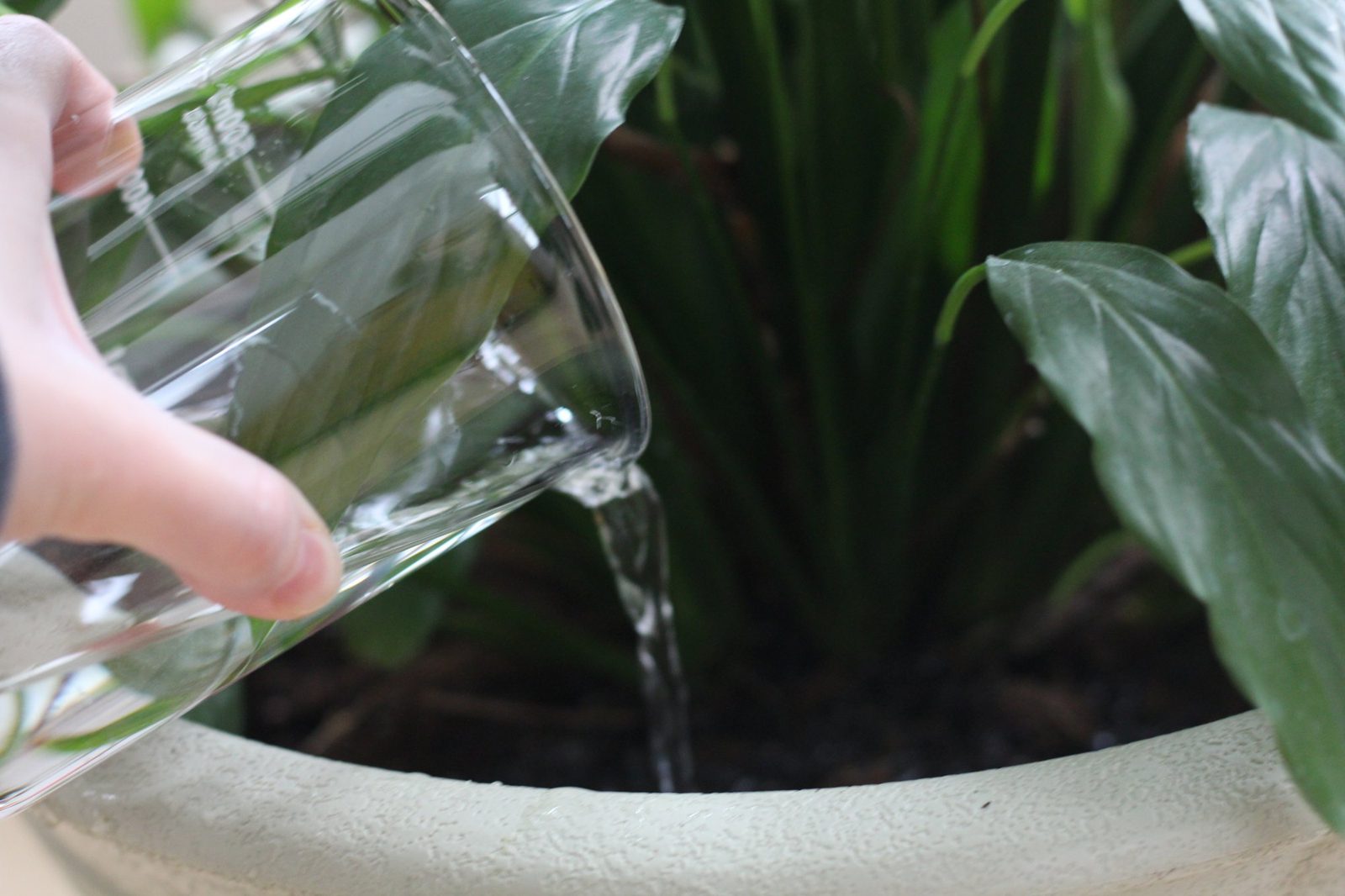
A peace lily droops most often because it is thirsty. Feel the soil. If the top 2 to 3 cm (1 in) is dry, water it well, and the leaves stand back up within a few hours. If the soil is wet and the plant still droops, the roots are rotting, and more water will make it worse.
The soil check is the whole test. Dry soil and wet soil look the same from above the leaves, and they need opposite fixes.
Find the cause fast
| What you see | Most likely cause |
|---|---|
| Whole plant flops, soil dry, pot light | Thirsty |
| Plant droops, soil wet, lower leaves yellow | Root rot from too much water |
| Droops every two or three days, roots fill the pot | Root bound |
| Droops in the afternoon, pale or scorched patches | Too much sun or heat |
| Limp leaves that turn black | Cold draft |
| Droops for a week or two after repotting | Repotting stress |
| Outer leaves lie flat, plant looks thin | Not enough light |
Thirsty
The peace lily has thin leaves that lose water fast. When the soil dries out, the whole plant lies down over the edge of the pot. It looks dead. It is not.
What to do. Water until it runs out of the drainage holes. Let it drain, then empty the saucer. The plant lifts within a few hours and is back to normal by the next day.
If the water runs down the sides and straight out the bottom, the soil has shrunk away from the pot. Set the pot in a bowl or sink with 5 cm (2 in) of water for 20 to 30 minutes. The soil soaks it up from below. How to bottom water houseplants step by step covers the method.
Many people use the droop as the signal to water. That works now and then. A plant that collapses over and over gets brown leaf tips and yellow lower leaves, and its life gets shorter. Check the soil every few days and water when the top 2 to 3 cm (1 in) is dry, before the flop.
Too much water
This is the dangerous one. Soggy soil rots the roots. Rotted roots cannot take up water, so the leaves wilt as if the plant were dry. Watering again speeds up the rot.
Signs of root rot:
- The soil is wet and has been wet for a week or more
- Lower leaves turn yellow
- Leaf stems feel soft at the base
- The soil smells sour or swampy
- The plant does not perk up after watering
What to do.
- Slide the plant out of the pot.
- Rinse the soil off the roots with lukewarm water.
- Cut off every root that is brown, mushy, or hollow. Healthy roots are white or cream and firm.
- Repot in fresh houseplant mix with a handful of perlite added. Use a pot with a drainage hole, no bigger than the root ball needs.
- Water once to settle the soil, then wait until the top 2 to 3 cm (1 in) is dry.
- Keep it out of direct sun for a week or two.
Cut off the worst of the wilted leaves so the smaller root system has less to support. Full steps are in what causes root rot in houseplants and how to fix it.
Check the cover pot too. A peace lily in a nursery pot set inside a decorative pot often sits in a puddle no one can see. Tip the water out after each watering.
Root bound
If the plant droops every two or three days, even with regular water, the pot is likely full of roots. There is not enough soil left to hold water.
Look for roots circling the top of the soil or growing out of the drainage holes. Repot in spring, one pot size up. See how to repot a houseplant step by step. A large, crowded clump can also be split into two or three plants. How to divide a houseplant explains how.
Too much sun or heat
Peace lilies grow in medium to bright, indirect light. Direct sun through glass heats the thin leaves, and they wilt even in damp soil. Pale, bleached, or scorched patches follow.
A heat vent does the same thing. In a cold-winter climate, the furnace runs for months, and the air it blows is hot and dry. A plant in that airflow droops by afternoon and gets brown tips.
Move the plant a few feet back from the window, or to an east or north window. Keep it out of the path of vents.
Cold
Peace lilies want 18 to 27°C (65 to 80°F). Below 10°C (50°F), the leaves go limp and then turn black.
The usual causes in winter are a spot by a drafty door, leaves pressed against cold glass, or an unwrapped trip from the store to the car. Move the plant to a warmer spot and cut off the black leaves at the soil line. New leaves grow from the center if the roots stayed warm. How to treat cold damage on houseplants has more.
After repotting
A peace lily often droops for one to two weeks after a repot or a division. The roots were disturbed and cannot keep up with the leaves for a while.
Keep the soil lightly moist, not soggy. Keep the plant out of direct sun. Do not feed it for at least a month. It recovers without any other help.
A new plant from the store
Store plants are grown in warm, humid greenhouses and are often root bound when you buy them. A droop in the first weeks at home is common. Check the soil every two or three days. If it dries that fast, repot it one size up.
Do drooped leaves recover?
Leaves that wilted from thirst recover fully, most within a day. Leaves that stay limp for days, or that turn yellow or black, do not. Cut them off at the soil line with clean scissors.
Flower stalks can stay bent after a hard wilt. Cut those off at the base too. To get new ones, read how to get a peace lily to bloom.
A note on pets
Peace lilies are toxic to cats and dogs. Chewing causes mouth pain, drooling, and sometimes vomiting. It is not a true lily. True lilies (Lilium, including Easter lily) are far more dangerous and can cause kidney failure in cats. Call your vet or a pet poison line if a pet chews either plant.
A quick checklist
- Feel the soil before you do anything else
- Dry soil: water well and empty the saucer
- Wet soil: stop watering and check the roots
- Roots filling the pot: repot one size up
- Move it out of direct sun and away from vents and drafts
- Keep it above 10°C (50°F)
- Water when the top 2 to 3 cm (1 in) is dry, before it flops