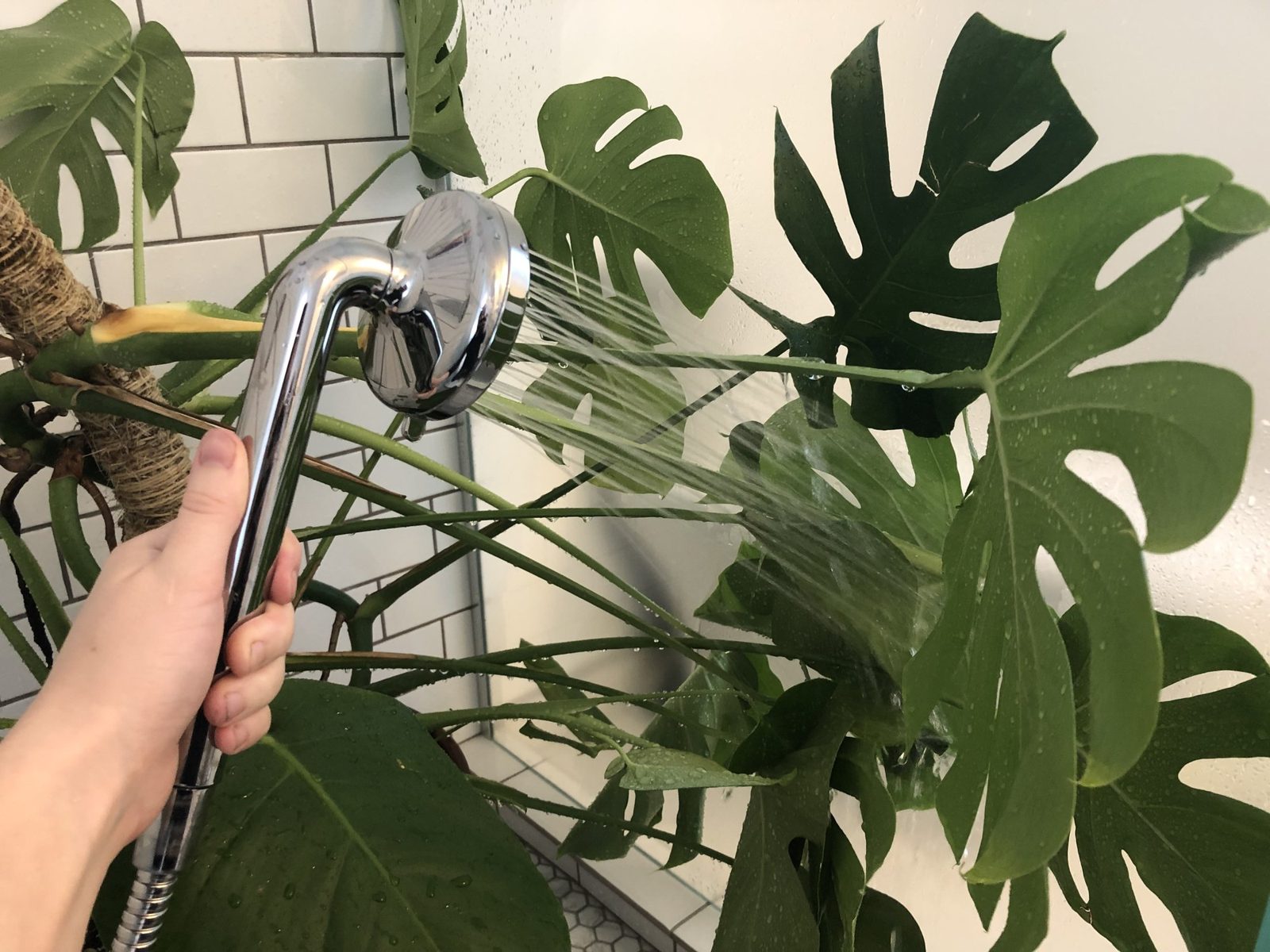
Clean smooth houseplant leaves by wiping them with a soft, damp cloth and plain lukewarm water. Rinse plants with many small leaves in the shower or sink. Brush fuzzy leaves and cacti with a soft, dry brush. Plain water is all most plants need, and leaf shine products and kitchen oils do more harm than good.
Dust is more than a cosmetic problem. A layer of dust blocks light from reaching the leaf, and less light means less growth. Dust also gives spider mites a place to hide. Clean leaves every month or two, and more often in a dusty house.
I earn a commission when you buy through links to Amazon. It costs you nothing extra.
What you need
- Two soft cloths. Microfiber works well because it lifts dust without scratching. A pack of soft microfiber cloths from Amazon will last for years.
- A bowl of lukewarm water
- A soft brush for fuzzy and spiny plants. A clean makeup brush or a small paintbrush is fine.
- A plastic bag or plastic wrap, for covering soil in the shower
Use lukewarm water. Cold water can leave pale marks on tropical leaves, and African violets are known for this.
If your tap water is hard, it can leave white spots when it dries. Use distilled water or rainwater for the final wipe if spots bother you.
Pick the method by leaf type
| Leaf type | Examples | Best method |
|---|---|---|
| Large and smooth | Monstera, rubber plant, fiddle leaf fig, peace lily | Wipe each leaf with a damp cloth |
| Small or many leaves | Pothos, ferns, weeping fig, palms | Rinse in the shower or sink |
| Fuzzy | African violet, purple passion, some begonias | Soft dry brush |
| Spiny or waxy succulents | Cacti, echeveria | Soft brush or a puff of air |
| Thin and delicate | Maidenhair fern, nerve plant | Gentle rinse or fine mist, then shake off |
How to wipe large leaves
- Dampen a cloth with lukewarm water and wring it out. It needs to be damp, not dripping.
- Hold the leaf from below with one hand. This stops the leaf from bending or tearing at the stalk.
- Wipe the top of the leaf from the stem toward the tip.
- Wipe the underside the same way. Pests gather there, so look as you go.
- Rinse the cloth often. A dirty cloth just moves the dust around.
- Use a clean cloth for each plant if you have seen any pests. This stops you from carrying them from one plant to the next.
New leaves are soft and tear without much force. Leave them alone until they firm up and darken.
How to rinse a plant in the shower
A shower cleans every leaf at once. It also washes off many spider mites and aphids.
- Check that the pot has a drainage hole. Without one, the pot fills with water.
- Cover the soil with a plastic bag or plastic wrap, loosely tucked around the stem. This keeps the mix from washing out and stops the soil from getting soaked when it does not need water.
- Set the plant in the tub or shower. Tilt it a little if you can, so water runs off the leaves and not into the pot.
- Use lukewarm water at low pressure. Test it on your wrist first.
- Rinse the tops and undersides of the leaves for a minute or two.
- Let the plant drip in the tub for 30 minutes.
- Return it to its spot once the leaves are mostly dry.
Do not put a wet plant straight into direct sun. Do not leave water sitting in the center of plants that grow as a rosette, such as echeveria or African violets. Tip the water out or blot it with a paper towel.
A small plant can be rinsed the same way in the kitchen sink with the sprayer.
In winter, do this in the morning so the leaves dry before the house cools down at night.
How to clean fuzzy leaves
Hairy leaves trap water, and water that sits on them can cause spots and rot. Keep them dry.
- Hold the leaf from below.
- Brush from the base of the leaf to the tip with a soft, dry brush.
- Tap the brush clean between leaves.
A set of soft detail brushes gives you a few sizes for small and large leaves.
How to clean cacti and succulents
A cloth catches on spines and rubs the powdery coating off succulents. That coating, called farina, protects the leaf, and it does not grow back on old leaves.
- Brush dust off cacti with a soft paintbrush.
- Blow dust out of tight rosettes with a rubber bulb blower or by gently blowing on them.
- Do not wipe leaves that have a white or blue powder on them.
What not to put on leaves
Many home recipes promise glossy leaves. Skip them all.
- Leaf shine sprays. They leave a film that collects more dust. Some can mark or damage leaves.
- Mayonnaise, milk, and cooking oils. They leave a greasy layer that holds dust, can go rancid, and can block the pores that leaves breathe through.
- Furniture polish and glass cleaner. These are not made for living tissue.
- Dish soap mixes. Dish soap is a detergent and can strip the natural wax from leaves.
A healthy leaf has its own natural gloss. Clean water brings it back.
If leaves have a sticky film that water alone does not shift, the cause is likely a pest. Read why are my houseplant leaves sticky. A ready-to-use insecticidal soap made for houseplants is the right product for that job. Follow the label and test one leaf first. Household products that are safe to use on houseplants goes through the rest of the cupboard.
Use cleaning time to check for pests
Wiping leaves puts your eyes on every part of the plant. Look for:
- Fine webbing where the leaf meets the stem (spider mites)
- White, cottony tufts in the joints (mealybugs)
- Brown bumps on stems and veins that scrape off (scale)
- Tiny pale specks or silvery streaks (thrips)
- Sticky residue on the leaf or the table below
A full routine is in how to check houseplants for pests. If you find something, move the plant away from the others before you do anything else.
How often to clean
- Every one to two months for most plants
- Monthly in homes with wood stoves, pets, open windows on gravel roads, or renovation dust
- Before winter, so plants catch as much of the weak winter light as they can
- Any time dust shows when you run a finger across a leaf
In a cold climate, winter light is short and weak, and furnaces blow dust around the house for months. A clean leaf catches more of the light there is. For other ways to boost light in the dark months, see how to get more light for indoor plants.
Quick checklist
- Lukewarm, plain water only
- Support each leaf from below
- Wipe large leaves, rinse small ones, brush fuzzy ones
- Clean the undersides
- Let plants dry out of direct sun
- No leaf shine, oils, mayonnaise, or milk
- Check for pests as you go