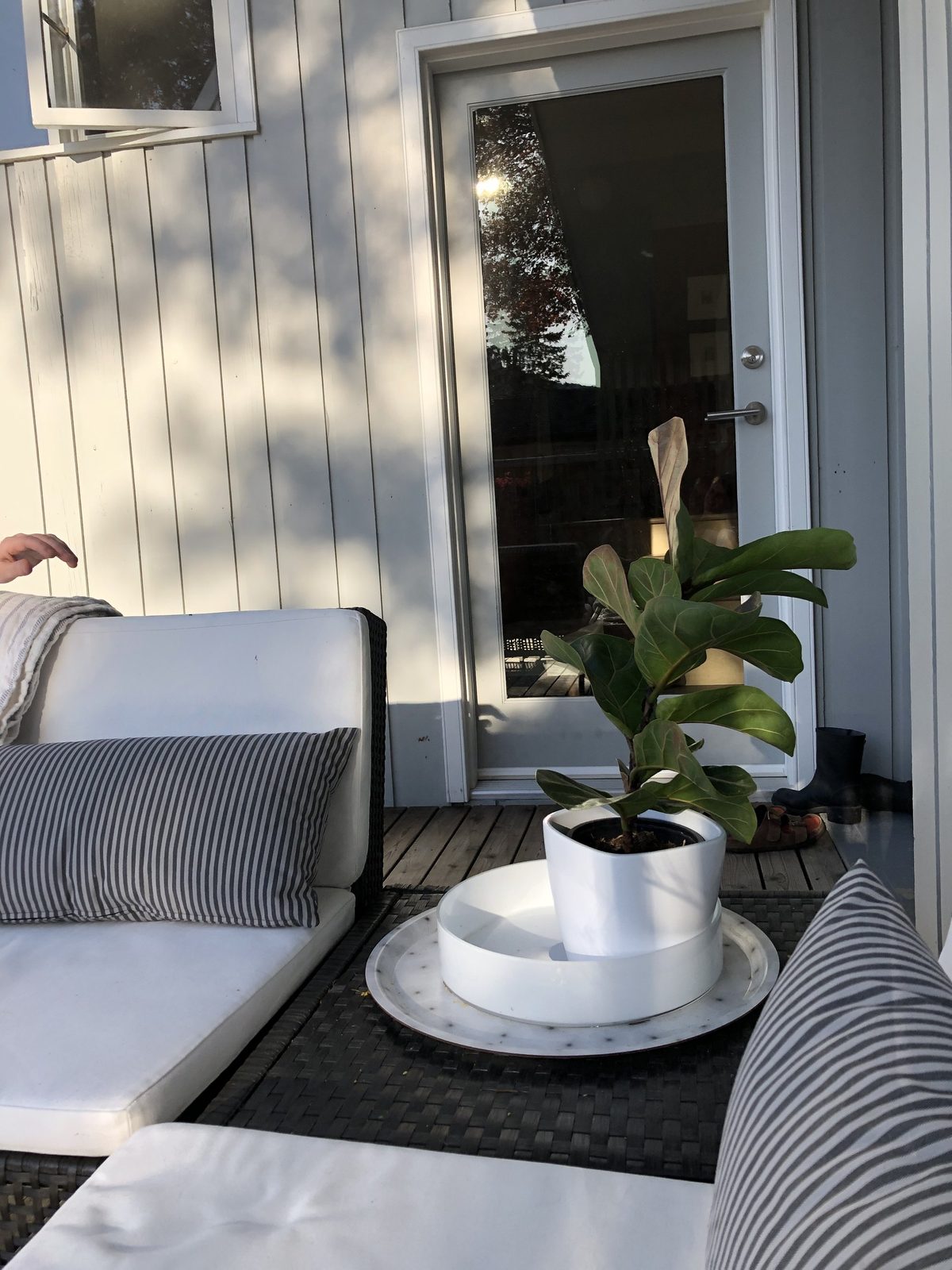
Fiddle leaf fig care guide
Ficus lyrata, also called fiddle fig, banjo fig
Published 2022-02-11
Quick care
- Light
- Bright indirect
- Water
- When the top 5 cm (2 in) of soil is dry
- Humidity
- Average room air is fine. Keep away from heat vents.
- Temperature
- 18 to 27°C (65 to 80°F). Keep above 13°C (55°F).
- Soil
- Chunky, well-draining houseplant mix
- Feeding
- Balanced liquid fertilizer, monthly in spring and summer
- Pets
- Toxic to cats and dogs, but the effects are mild. The sap irritates the mouth, stomach, and skin.
- Difficulty
- Fussy
- Mature size
- 1.5 to 3 m (5 to 10 ft) tall indoors
- Propagation
- Stem cuttings in water, or air layering
The fiddle leaf fig has huge, violin-shaped leaves and a reputation for drama. It is not hard to grow. It is hard to please once and then leave alone. Give it bright light, steady water, and one spot it can call home.
Light
Give it the brightest spot you have, out of harsh afternoon sun. Right beside an east window is ideal. A few hours of gentle morning sun helps it grow.
In low light, it drops lower leaves and stops growing. Light is the most common reason a fiddle leaf fig struggles.
Turn the pot a quarter turn every week or two. It leans toward the window.
Water
Water when the top 5 cm (2 in) of soil is dry. Water until it drains out the bottom, then empty the saucer. Do not water again until the top dries.
Both too much and too little water cause brown spots and dropped leaves. A pattern helps: the same amount of water, checked on the same day each week. Read how to tell if a houseplant is overwatered or underwatered.
Soil and potting
Use a chunky, fast-draining mix. Add orchid bark and perlite to bagged houseplant soil.
Repot every one to two years in spring, only one pot size up. A pot too big holds wet soil around the roots. A heavy pot keeps a tall tree from tipping. See how to repot a houseplant step by step.
Humidity and temperature
Average room air is fine. Keep it away from heat vents, fireplaces, and drafty doors. Cold air and hot, dry blasts both make leaves drop.
Keep it between 18 and 27°C (65 and 80°F), and above 13°C (55°F).
Feeding
Feed monthly in spring and summer with a balanced liquid fertilizer. Skip fall and winter.
Pruning and branching
Most fiddle leaf figs are sold as a single stem. To make it branch, cut the top off just above a leaf in spring or early summer. New branches grow from the nodes below the cut.
Wear gloves. The milky sap irritates skin. Dab the cut with a paper towel until it stops running.
Wipe the leaves with a damp cloth every few weeks. Dusty leaves take in less light.
Moving it
Fiddle leaf figs drop leaves after a big change in light, even a move to a better spot.
Here is why. Each leaf builds itself for the light it grows in. A leaf grown in bright light is thicker. A leaf grown in shade is thinner and wider, to catch more light. Once a leaf is full size, it can only adjust a little. Move the plant from bright light to dim, and the plant drops leaves it can no longer support. Move it from dim light to bright, and the thin shade leaves burn.
New leaves then grow to suit the new spot. A fig can take four to six weeks to settle after a move indoors.
So pick a bright place and leave it there. If it goes outside for summer, change the light in steps: shade first, then more light over a week or two. Do the same in reverse in fall. A plant that just came home from the store may drop a few leaves in its first weeks. It recovers.
Propagation
Cut a stem piece with two or three leaves and a few nodes. Set it in a jar of water in bright light. Roots grow in three to six weeks. Pot it up once roots are 5 cm (2 in) long.
Air layering works on bigger stems. Wound the stem, wrap it in damp sphagnum moss and plastic, and cut below the new roots once they show.
Problems
| What you see | Most likely cause |
|---|---|
| Dark brown spots that start in the middle or edge, with yellow around them | Root rot from too much water |
| Light brown, crispy edges | Too dry, or dry air from a heat vent |
| Lower leaves drop | Not enough light, a recent move, or a cold draft |
| Small red or brown dots on new leaves | Edema from uneven watering. It fades as the leaf grows. |
| Leaves droop | Too dry, or a recent move |
| Tree leans | Not turned often enough |
Pests
Spider mites, scale, and mealybugs can show up. Look under leaves and along the stems. Fungus gnats mean the soil stays wet too long. Read how to get rid of fungus gnats in houseplants.
Pet safety
The ASPCA lists fiddle leaf fig as toxic to cats and dogs, with mild effects. Chewing can cause drooling, vomiting, and diarrhea. The sap can also irritate skin. Keep fallen leaves picked up if your pets chew.
Varieties
- Tree form has a bare trunk with leaves on top.
- Bush form has leaves all the way down several stems.
- ‘Bambino’ is a compact type with smaller leaves. It stays under 1 m (3 ft) for years.
- ‘Compacta’ has smaller leaves set close together.
- Variegated fiddle leaf figs have cream patches and need even more light.
In my house
My fiddle leaf fig has never dropped its leaves on me, but figs do that. I have some fruiting figs that I carry outside for summer and back inside for winter. The light is so different that they drop their leaves.