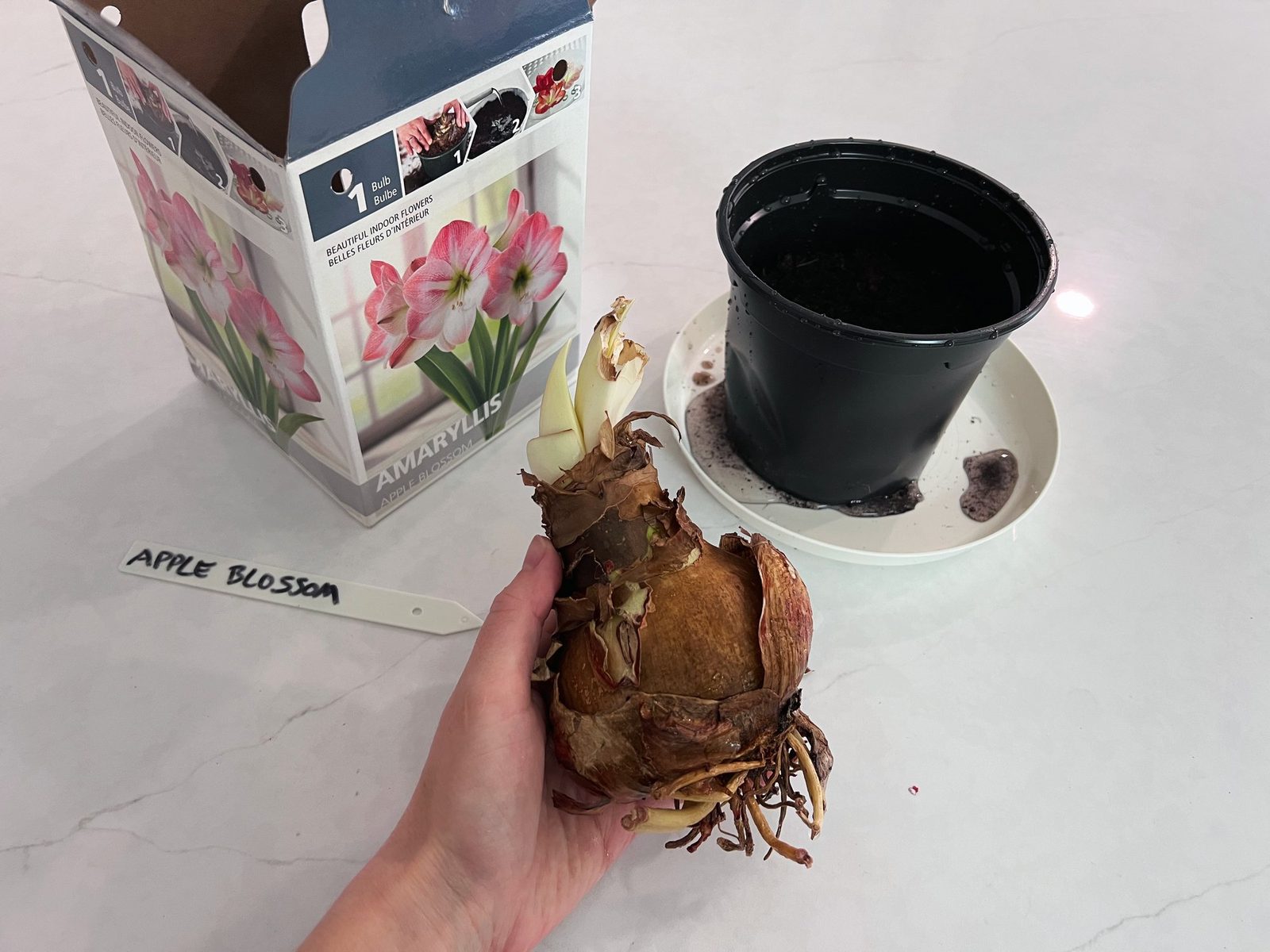
An amaryllis blooms again if you let the leaves feed the bulb all summer and then give it a rest. After it flowers, cut off the stalk and keep the leaves growing in a sunny window with regular fertilizer. In early fall, stop watering and keep the bulb cool and dry for 8 to 10 weeks. Then bring it into the warmth and water it. Flowers follow in about 6 to 8 weeks.
Most people throw the bulb out after the flowers fade. A bulb that is cared for can bloom every year for decades.
I earn a commission when you buy through links to Amazon. It costs you nothing extra.
How the bulb works
The flowers you saw this winter were formed inside the bulb last summer. The bulb is a storage tank. The leaves fill it.
So the months after bloom matter most. Long, green leaves in strong light mean a fat bulb and more flowers. If the leaves are cut off or kept in a dim room, the bulb shrinks and gives leaves only next year.
The yearly cycle
| Stage | When | What to do |
|---|---|---|
| After bloom | January to March | Cut the stalk, keep the leaves, sunny window |
| Growing | April to August | Sun, water, fertilizer. Outdoors if you can. |
| Wind down | September | Bring inside, stop watering |
| Rest | September to November | Cool, dark, dry for 8 to 10 weeks |
| Wake up | November or December | Fresh mix on top, warm spot, water once |
| Bloom | 6 to 8 weeks later | Bright light, turn the pot |
Step 1: after the flowers fade
- Snip off each flower as it wilts, so the plant does not make seeds.
- When the whole stalk yellows and sags, cut it 2 to 5 cm (1 to 2 in) above the bulb.
- Do not cut the leaves. Not one.
- Move the pot to the sunniest window you have.
- Water when the top 2 to 5 cm (1 to 2 in) of soil is dry.
Step 2: grow the leaves all summer
Treat the plant like a sun-loving houseplant from spring to early fall.
- Light: as much as you can give it. A south or west window indoors.
- Water: when the top of the soil is dry. Water the soil, not the top of the bulb.
- Fertilizer: a balanced liquid houseplant fertilizer every two to four weeks, following the label. A liquid houseplant fertilizer from Amazon does the job.
The bulb gains the most if it spends the summer outside. Wait until nights stay above 10°C (50°F), which is often late May or June in a cold-winter climate. Start it in shade and move it into more sun over a week or two so the leaves do not burn. See how to move houseplants outside for summer without sunburn.
You can leave it in its pot or sink the pot into a garden bed. Keep watering and feeding.
Step 3: start the rest
In early to mid September, before any frost, bring the pot inside. A frost can kill the bulb.
- Stop watering and stop fertilizer.
- Put the pot in a cool, dark, dry place. Aim for about 10 to 13°C (50 to 55°F). A basement corner, a cool closet, or an attached garage that never freezes can work.
- Let the leaves yellow and wither. Cut them off 2 to 5 cm (1 to 2 in) above the bulb once they are brown.
- Leave the bulb alone for 8 to 10 weeks. No water.
Do not store the bulb in a fridge with apples or other fruit. Ripening fruit gives off ethylene gas, which can ruin the flower bud inside the bulb.
Is the rest required?
Not strictly. An amaryllis kept green and growing in a bright window all year often blooms anyway, usually in spring. The dry rest gives you control over the timing and tends to give a more reliable bloom. If you want flowers in December or January, do the rest.
Step 4: wake it up
Count back 6 to 8 weeks from when you want flowers, with the rest before that. A bulb put to rest in mid September can be started in mid to late November for bloom around the new year.
- Bring the pot into a warm room, about 20 to 24°C (68 to 75°F).
- Scrape off the top few centimeters (about 1 in) of old mix and replace it with fresh mix. Repot fully only every three or four years. Amaryllis blooms best when it is snug.
- If you do repot, pick a pot only 2 to 5 cm (1 to 2 in) wider than the bulb, with a drainage hole. Set the bulb so the top third sits above the soil. A heavy pot helps, because the plant gets top heavy in bloom.
- Water once, well. Then wait.
- Do not water again until you see green growth at the tip. A bulb with no roots or leaves rots in wet soil.
- Once growth starts, move it to bright light and water when the top of the soil is dry.
Step 5: while it blooms
- Turn the pot a quarter turn every day or two so the stalk grows straight.
- Stake a tall stalk before the buds open. A plant support stake from Amazon or a bamboo cane and soft tie will do.
- Once the flowers open, move the plant out of direct sun and into a cooler room, about 16 to 18°C (60 to 65°F). The flowers last longer.
Why it gave leaves and no flowers
- The leaves did not get enough sun last summer. This is the most common cause.
- No fertilizer. The bulb ran down its stores.
- The leaves were cut off early.
- The rest was too short or too warm.
- The bulb is small. A bulb that has shrunk needs a full summer of good growth, or two, to build back up.
- The pot is far too big. Extra wet soil leads to rot, not flowers.
Squeeze the bulb gently. A firm, heavy bulb is healthy. A soft or mushy one is rotting.
Waxed and water-grown bulbs
Bulbs dipped in wax bloom with no soil or water. The wax seals the bulb, and the roots are often cut flat. Most are spent after one bloom. You can peel off the wax, pot the bulb, and try, but do not count on it.
Bulbs grown in water or pebbles can be saved more often. Pot them in soil right after bloom and follow the steps above.
Is amaryllis safe for pets?
No. Amaryllis is toxic to cats and dogs. The bulb holds the most toxin. Chewing the plant can cause vomiting, drooling, belly pain, and low energy. Keep the plant and any stored bulbs out of reach. If your pet eats some, call your vet or a pet poison line.
Checklist for next year
- Stalk cut, leaves kept
- Sunniest window, or outdoors for the summer
- Fertilizer every two to four weeks until September
- Inside before frost
- 8 to 10 weeks cool, dark, and dry
- Fresh mix, warm room, one watering
- No more water until green growth shows
For other winter bloomers, see best flowering houseplants that bloom indoors and how to get a Christmas cactus to bloom.