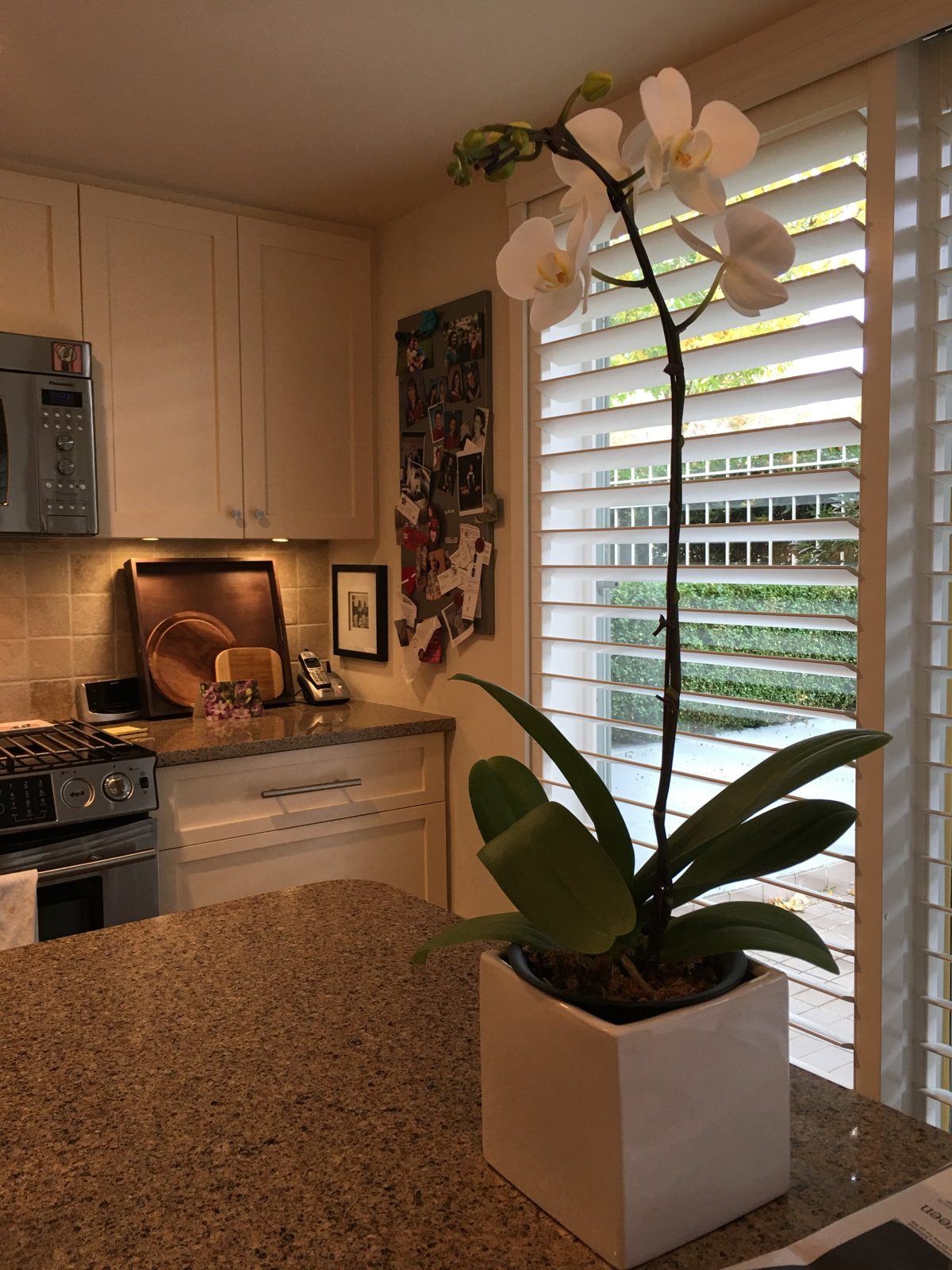
The best flowering houseplants are African violet, moth orchid, peace lily, anthurium, and Christmas cactus. All five bloom indoors with window light alone, and all five bloom again year after year. The other plants on this list flower well too, but each needs one extra thing, such as more sun or a cool rest.
Flowers take more energy than leaves. A plant that lives in a dim corner may stay green for years and never bloom. For almost every plant here, the fix for no flowers is more light.
I earn a commission when you buy through links to Amazon. It costs you nothing extra.
The 12 plants at a glance
| Plant | Light | Bloom time indoors | Pet safe |
|---|---|---|---|
| African violet | Bright indirect | On and off all year | Yes |
| Moth orchid | Bright indirect | Winter to spring, for two to three months | Yes |
| Peace lily | Medium to bright indirect | Spring, sometimes again in fall | No |
| Anthurium | Bright indirect | On and off all year | No |
| Christmas cactus | Bright indirect | Late fall to winter | Yes |
| Kalanchoe | Bright, some direct sun | Winter to spring | No |
| Bromeliad | Bright indirect | Once, for several months | Yes |
| Cyclamen | Bright indirect, cool room | Fall to spring | No |
| Amaryllis | Bright, some direct sun | Winter | No |
| Hoya | Bright indirect, some morning sun | Spring to fall | Yes |
| Lipstick plant | Bright indirect | Spring to fall | Yes |
| Tropical hibiscus | Direct sun | Spring to fall | Yes |
The plants
African violet
African violet (Saintpaulia) blooms more often than any other common houseplant. It flowers at normal room temperature in an east window. Water from the bottom with room-temperature water, because cold water spots the fuzzy leaves. It is safe for cats and dogs.
Moth orchid
Moth orchid (Phalaenopsis) is the orchid sold in grocery stores. One flower spike lasts two to three months. A drop in night temperature in fall helps start a new spike. See how to get an orchid to bloom again for the full steps. It is safe for cats and dogs.
Peace lily
Peace lily (Spathiphyllum) makes white, hood-shaped blooms. It lives in low light but flowers only in medium to bright indirect light. It is toxic to cats and dogs, and chewing it causes mouth irritation, drooling, and vomiting. It is not a true lily. If yours has not flowered in a year, read how to get a peace lily to bloom.
Anthurium
Anthurium (Anthurium andraeanum) has waxy red, pink, or white “flowers” that are colored leaves called spathes. Each one lasts for weeks. It wants bright indirect light and a chunky, fast-draining mix. It is toxic to cats and dogs.
Christmas cactus
Christmas cactus (Schlumbergera) sets buds when nights get long and cool in fall. Short winter days in a cold climate do this for you, as long as the plant sits in a room with no lamps on at night. Do not move it once buds form, or they may drop. It is safe for cats and dogs.
Kalanchoe
Kalanchoe (Kalanchoe blossfeldiana) is a succulent with clusters of small flowers that last for weeks. It needs a bright window and dry soil between waterings. Like the Christmas cactus, it needs long nights to set new buds. It is toxic to cats and dogs.
Bromeliad
A bromeliad such as Guzmania blooms once, and the colored bract lasts three to six months. After that the mother plant slowly dies and grows baby plants, called pups, at the base. Pot up the pups to get the next round of blooms. It is safe for cats and dogs.
Cyclamen
Cyclamen (Cyclamen persicum) blooms through the dark months and likes it cool. A room at 10 to 18°C (50 to 65°F) keeps it flowering for months. It fades fast beside a heat vent. It is toxic to cats and dogs, and the tuber is the most toxic part.
Amaryllis
Amaryllis (Hippeastrum) grows a tall stalk with huge trumpet flowers, about six to eight weeks after planting the bulb. The bulb blooms again each year if you grow the leaves all summer and give it a dry rest in fall. It is toxic to cats and dogs. See how to get an amaryllis to bloom again.
Hoya
Hoya (Hoya carnosa) makes round clusters of waxy, star-shaped flowers. A hoya may take two or three years to bloom for the first time. Do not cut off the short flower stalks after blooming. New flowers grow from the same stalks. It is safe for cats and dogs.
Lipstick plant
Lipstick plant (Aeschynanthus radicans) is a trailing plant with red tube flowers that push out of dark cups. It blooms best in a hanging pot near a bright window. It is safe for cats and dogs.
Tropical hibiscus
Tropical hibiscus (Hibiscus rosa-sinensis) needs the most light of any plant here. Give it a south or west window with at least four hours of direct sun. Each flower lasts a day or two, and a healthy plant keeps making more. It is safe for cats and dogs.
Why a houseplant stops blooming
Most plants arrive from the greenhouse in full flower. When those flowers fade, the plant needs the right conditions to make more.
- Not enough light. This is the cause most of the time. Move the plant closer to the window.
- Too much nitrogen. A fertilizer high in nitrogen grows leaves in place of flowers.
- No rest period. Christmas cactus, kalanchoe, amaryllis, and orchids need a cool or dry rest, or long nights, to set buds.
- A pot that is too big. Many plants put energy into roots until the pot is full.
- Dry air and drafts. Buds drop when a furnace vent blows on them or when the plant sits by a cold door.
How to get more flowers
- Put the plant within 60 cm (2 ft) of an east, south, or west window. Use a sheer curtain if the leaves scorch.
- In the dark months, add light. A full-spectrum LED grow bulb in a desk lamp is enough for an African violet or an orchid. See how to choose a grow light.
- Feed during active growth. A fertilizer made for flowering houseplants has more phosphorus and less nitrogen. Follow the label, and stop feeding during the rest period.
- Pinch off faded flowers so the plant does not spend energy on seeds.
- Keep the plant a little snug in its pot.
What to do when the flowers fade
Do not throw the plant out. For most plants on this list, faded flowers mean the plant is resting, not dying.
- Cut the spent flower stalk on an amaryllis, cyclamen, or kalanchoe.
- Leave the flower stalks on a hoya.
- Keep watering and feeding the leaves through spring and summer.
- Give the plant its rest in fall, if it needs one.
- Watch for buds, and then leave the plant where it is.
A bromeliad is the one exception. The mother plant will not bloom again, so grow on the pups.