Articles · Seasonal care
How to move houseplants outside for summer without sunburn
Published 2026-11-10
Move houseplants outside once nights stay above 10°C (50°F). Start them in full shade for a week, then give them a little morning sun. Leaves that grew indoors burn in direct sun within hours.
A summer outdoors gives a plant more light than any window. Growth is faster, leaves are bigger, and stems are sturdier. The move is the risky part.
When to move plants out
Wait for both of these.
- The last frost has passed.
- Nights have stayed above 10°C (50°F) for a week or more.
Succulents, cacti, and snake plants handle cool nights a little better. Thin-leaved tropical plants do not. When in doubt, wait another week. A cold night sets a plant back more than a late start.
Why indoor leaves burn
A leaf builds itself for the light it grows in. A leaf grown indoors is thin and wide, made to catch weak light. It has little protection from strong sun.
Outdoor shade is brighter than a sunny room. Direct outdoor sun is many times brighter again. Put an indoor leaf in it, and the leaf bleaches, then turns brown and crisp.
Burned leaves do not heal. The plant has to grow new leaves made for the new light. Hardening off gives it time to do that.
Harden off over two weeks
| Days | Where | What to watch |
|---|---|---|
| 1 to 4 | Full shade. The north side of the house, a covered porch, or under a dense tree. | Wind. Bring plants in if nights turn cold. |
| 5 to 8 | Bright shade, with an hour or two of early morning sun | Pale or bleached patches. Move back to shade if you see them. |
| 9 to 14 | Morning sun until about 10 or 11 a.m., then shade | Soil drying faster. Water more often. |
| After day 14 | The plant’s summer spot | Sun lovers can take more. Shade plants stay in shade. |
Cloudy days are the best days to start.
Only sun-loving plants finish in direct sun. Most houseplants come from forest floors, and their summer home is bright shade.
Where each plant spends the summer
| Summer spot | Plants |
|---|---|
| Sun for most of the day, after hardening off | Aloe vera, jade plant, echeveria, desert cacti, ponytail palm, yucca, tropical hibiscus, and olive tree |
| Morning sun and afternoon shade | Snake plant, rubber plant, fiddle leaf fig, bird of paradise, croton, hoya, and Christmas cactus |
| Bright shade, no direct sun | Monstera, philodendron, pothos, spider plant, peace lily, Boston fern, and palms |
Plants better left indoors
- Calathea and prayer plant. Wind and dry air shred and crisp the leaves.
- African violets. Rain spots the fuzzy leaves.
- Moth orchids in bloom.
- Velvet-leaved plants, such as velvet philodendron and purple passion.
- Anything rare, new, or sick.
- Any plant too heavy for you to carry in when a storm or a cold snap comes.
If you have pets or small children who use the yard, keep toxic plants out of their reach outdoors too.
Set up the pots for outdoors
- Drainage holes are a must. A summer storm fills a pot with no hole.
- Remove the saucers, or empty them after rain. A full saucer drowns roots and breeds mosquitoes.
- Lift pots off the ground. Pot feet or a couple of bricks keep slugs and ants out of the drainage holes.
- Shelter from wind. Tall plants blow over. Put them against a wall, or set the pot inside a heavier one.
- Use a caddy. Wheels under a heavy pot make the difference between moving it and leaving it to burn.
Summer care outdoors
Water more. Sun, wind, and warmth dry a pot fast. A plant watered every ten days inside may need water every two or three days outside. Small pots and terracotta dry first. Check the soil by touch each morning in hot weather.
Feed. A plant that is growing fast uses more food. Feed at half strength every two to four weeks through summer.
Check for pests each week. Look under the leaves and around the stems. A firm spray from the hose clears most aphids and mites.
Turn the pots. A quarter turn each week keeps growth even.
Watch the forecast. Move plants under cover before hail, high wind, or a heat wave.
In my house
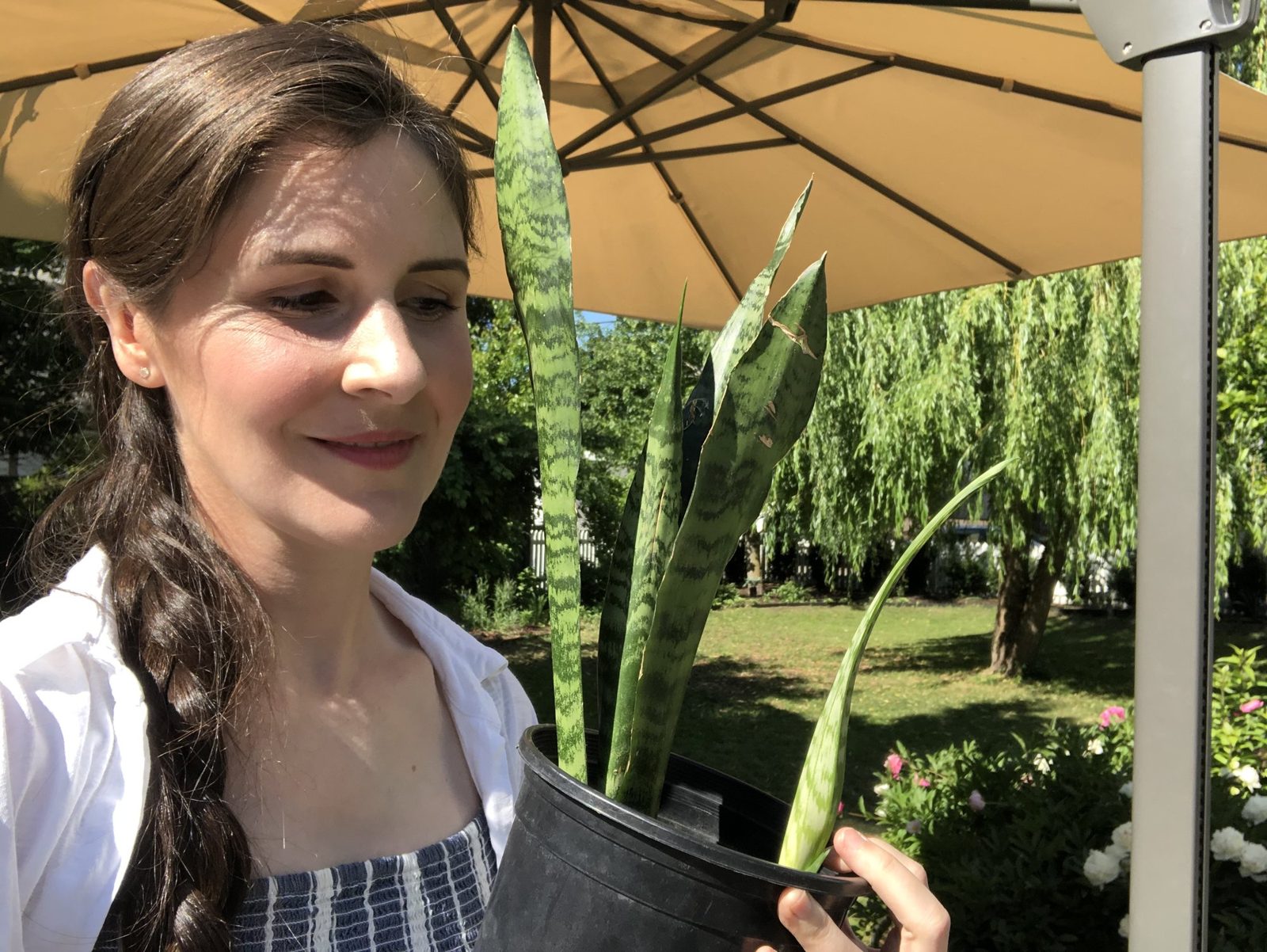
My snake plants and my monstera go outside in summer for more light.
The monstera is heavy. Sometimes it misses the shade, and the leaves burn and shrivel in direct sun.
My aloe goes out on the north side of the house first. If it skips that step, it scalds to a pale gray. Gentle changes work best.
My fruiting figs drop leaves when I move them outside, and again when they come back in. My fiddle leaf fig indoors has never dropped a leaf. Leaves grow to suit the light they are in, so a big change in light costs a plant some leaves.
What sunburn looks like
| What you see | What it means | What to do |
|---|---|---|
| Pale, bleached, or silver-gray patches on the top leaves | Sun scald | Move to shade now |
| Brown, crisp patches a few days later | The scalded patches have died | Leave the leaf until new growth comes, then trim |
| Red or purple tints on succulents | Sun stress. Mild is harmless. | Slow down the move to full sun |
| Limp leaves at midday that recover by evening | Heat and thirst | Water, and give afternoon shade |
| Torn or tattered leaf edges | Wind | Move to a sheltered spot |
A burned plant is not a dead plant. Keep it in shade, water it, and wait. New leaves grow in built for outdoor light.
When summer ends
Plants need to come in before nights drop back to 10°C (50°F). The move in needs the same slow change in light, plus a wash and a pest check. Read how to bring houseplants inside for winter without bugs.
Quick answers
When can houseplants go outside? After the last frost, once nights stay above 10°C (50°F).
Can all houseplants go outside in summer? No. Calathea, prayer plant, and African violets do better indoors.
How long does hardening off take? About two weeks.
Will sunburned leaves recover? No. The plant grows new leaves that can take the sun.
Can houseplants stay out in the rain? Yes, in pots with drainage holes and no saucers. Rain is good for them.