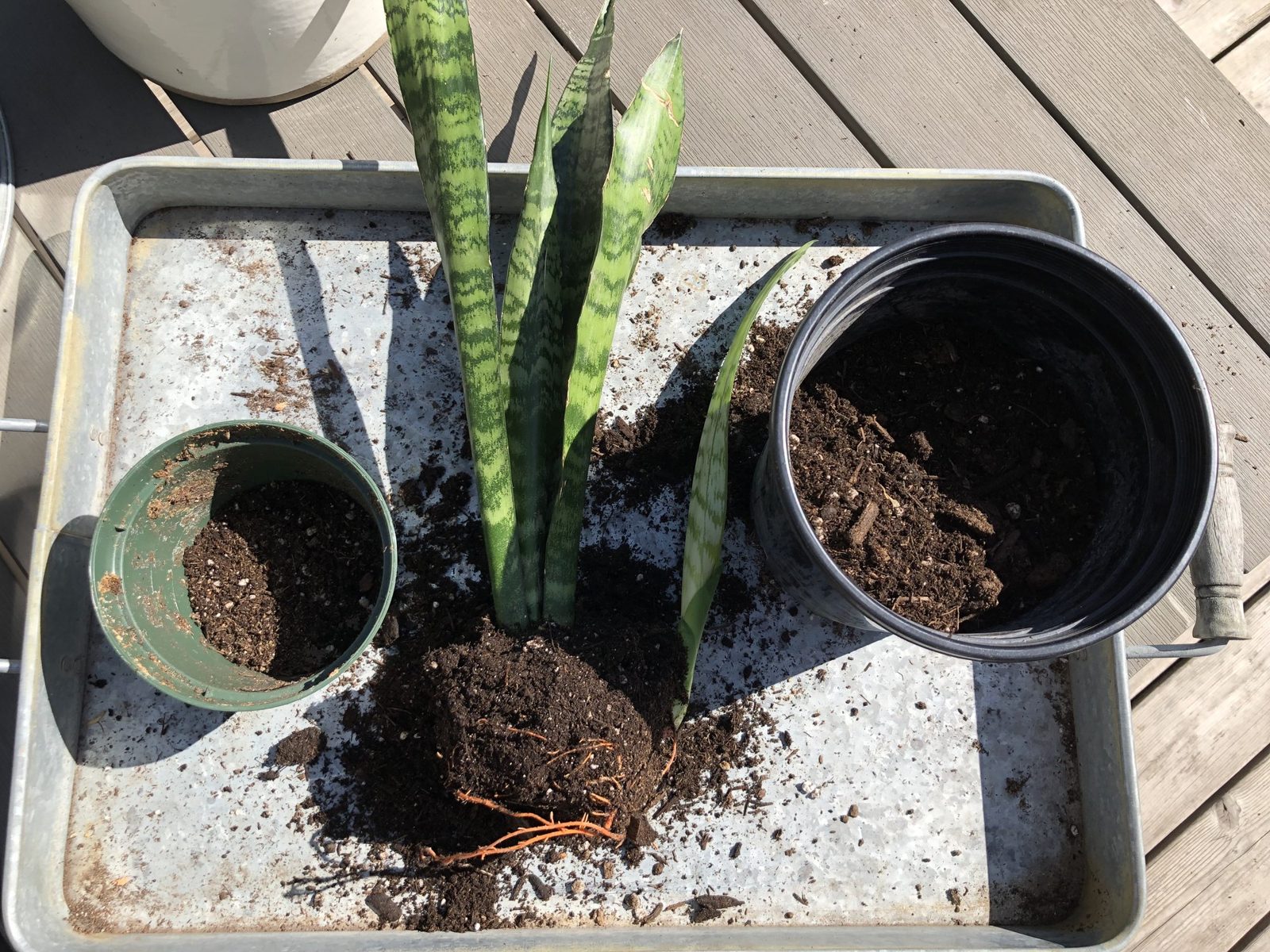
There are three ways to propagate a snake plant: divide the clump, root leaf cuttings in soil, or root leaf cuttings in water. Division is the fastest. You get a full plant the same day. Leaf cuttings work, but roots and a new pup can take two to three months or longer.
Division is also the only way to keep the yellow edges on striped types. Pups grown from leaf cuttings of yellow-edged plants often come up plain green.
I earn a commission when you buy through links to Amazon. It costs you nothing extra.
Which method to pick
| Method | Time to a new plant | Keeps yellow edges | Good for |
|---|---|---|---|
| Division | Same day | Yes | A full pot with several clumps |
| Removing a pup | Same day | Yes | A plant with small offsets at the edge |
| Leaf cuttings in soil | Two to three months or more | No | A fallen or damaged leaf, or many new plants |
| Leaf cuttings in water | Two to three months or more | No | Watching roots grow |
What you need
- A clean, sharp knife
- 70% isopropyl alcohol to wipe the blade
- Cactus and succulent mix, or potting soil mixed half and half with perlite
- Small pots with drainage holes
- A jar, for the water method
A bag of cactus and succulent mix from Amazon and a few small terracotta pots with drainage holes cover all three methods.
Spring and summer are the times to do this. The plant is growing, and cuts heal and root faster. In a cold-winter climate, cuttings started in November often sit for months with no change.
Method 1: division
A snake plant spreads by thick stems under the soil called rhizomes. Each rhizome sends up a fan of leaves. A pot with two or more fans can be divided.
- Let the soil dry out first. Dry soil falls away from the roots.
- Slide the plant out of its pot. Squeeze a plastic pot to loosen it. Run a knife around the inside of a clay pot.
- Shake off the soil until you can see the rhizomes. They are thick, pale orange or white, and they link one fan to the next.
- Find the natural gaps between fans.
- Pull the clump apart with your hands, or cut through the rhizome with a clean knife.
- Check that each piece has at least three leaves and its own roots.
- Pot each piece in dry mix, at the same depth it grew before. Use a snug pot.
- Firm the soil so the leaves stand up.
- Wait a week, then water.
Keep the new pots in bright, indirect light. Water only when the soil is dry all the way down.
Remove a single pup
Pups are the small new shoots at the edge of the pot. Wait until a pup is about 10 to 15 cm (4 to 6 in) tall and has a few roots of its own. Brush the soil away, follow the rhizome back toward the mother, and cut it with a clean knife. Pot the pup in a small pot of dry mix and wait a week to water.
More on the method is in how to divide a houseplant.
Method 2: leaf cuttings in soil
One long leaf makes several cuttings.
- Cut a healthy, firm leaf off at the soil line.
- Cut it across into pieces about 8 cm (3 in) long.
- Mark the bottom of each piece. A piece planted upside down never roots. Cut a small V notch in the bottom edge, or draw an arrow on the leaf with a marker.
- Let the pieces dry for a day so the cuts seal. Thick leaves can take two or three days.
- Fill a pot with lightly damp cactus mix.
- Push the bottom end of each piece 2 to 3 cm (1 in) into the mix. Firm the soil.
- Set the pot in bright, indirect light in a warm room.
- Water when the mix is dry. Keep it on the dry side. Wet soil rots the cuttings.
Roots form first. Then a small rhizome grows at the base, and a pup pushes up through the soil beside the cutting. That can take two to three months, and longer in low light or a cool room.
The cutting itself never grows taller. The pup is the new plant. Once the pup has a few leaves, you can cut the old piece away or leave it.
Method 3: leaf cuttings in water
- Cut and mark the pieces as above. Whole leaves also work.
- Let them dry for a day.
- Stand the pieces in a jar with 2 to 3 cm (1 in) of water. The bottom end goes down.
- Set the jar in bright, indirect light.
- Change the water every week. Rinse the jar and the cut ends.
- Pot the cuttings in cactus mix once the roots are about 2 to 5 cm (1 to 2 in) long.
Keep the water shallow. A cutting that sits deep in water is more likely to rot.
Water roots have a harder time when they move to soil. Keep the mix lightly damp for the first two weeks after potting, then let it dry between waterings.
Why the yellow edges disappear
Types such as ‘Laurentii’ have a green center and yellow edges. The yellow comes from a layer of cells that a leaf cutting does not pass on. A pup that grows from a leaf cutting grows from the green tissue, so it comes up green.
To keep the yellow edges, divide the plant.
Troubleshooting
| What you see | Most likely cause | What to do |
|---|---|---|
| Cutting turns brown and mushy at the base | Rot from too much water | Cut above the rot, dry it for a day or two, and start again in drier mix or fresh water |
| No roots after three months | Planted upside down, too cold, or too dark | Check the notch. Move to a warmer, brighter spot. |
| Cutting wrinkles and shrinks | Too dry for too long | Water lightly. It can still root. |
| Roots but no pup | Normal. Pups come later. | Wait. Keep it warm and bright. |
| Divided plant leans or flops | Loose soil | Firm the soil, or tie the leaves together for a few weeks |
| Pup is plain green | Leaf cutting from a yellow-edged type | Nothing. Divide next time. |
If leaves keep falling after a division, read why is my snake plant falling over.
A note on pets
Snake plants are mildly toxic to cats and dogs. Chewing the leaves can cause drooling, vomiting, and diarrhea. Keep jars and trays of cuttings out of reach. Call your vet or a pet poison line if a pet eats some.
Care for the new plants
- Light. Bright, indirect light speeds growth. Low light keeps the plant alive but slows it a lot.
- Water. Water only when the soil is dry to the bottom of the pot.
- Pot. Keep it snug. Move up a size when roots crack or bulge the pot.
- Food. Do not feed for the first few months. After that, feed two or three times in spring and summer at half strength.
For the next size up, see how to repot a houseplant step by step. For more plants that root from pieces, see how to propagate houseplants from cuttings. If you like this kind of plant, there are more in indoor plants like snake plant.