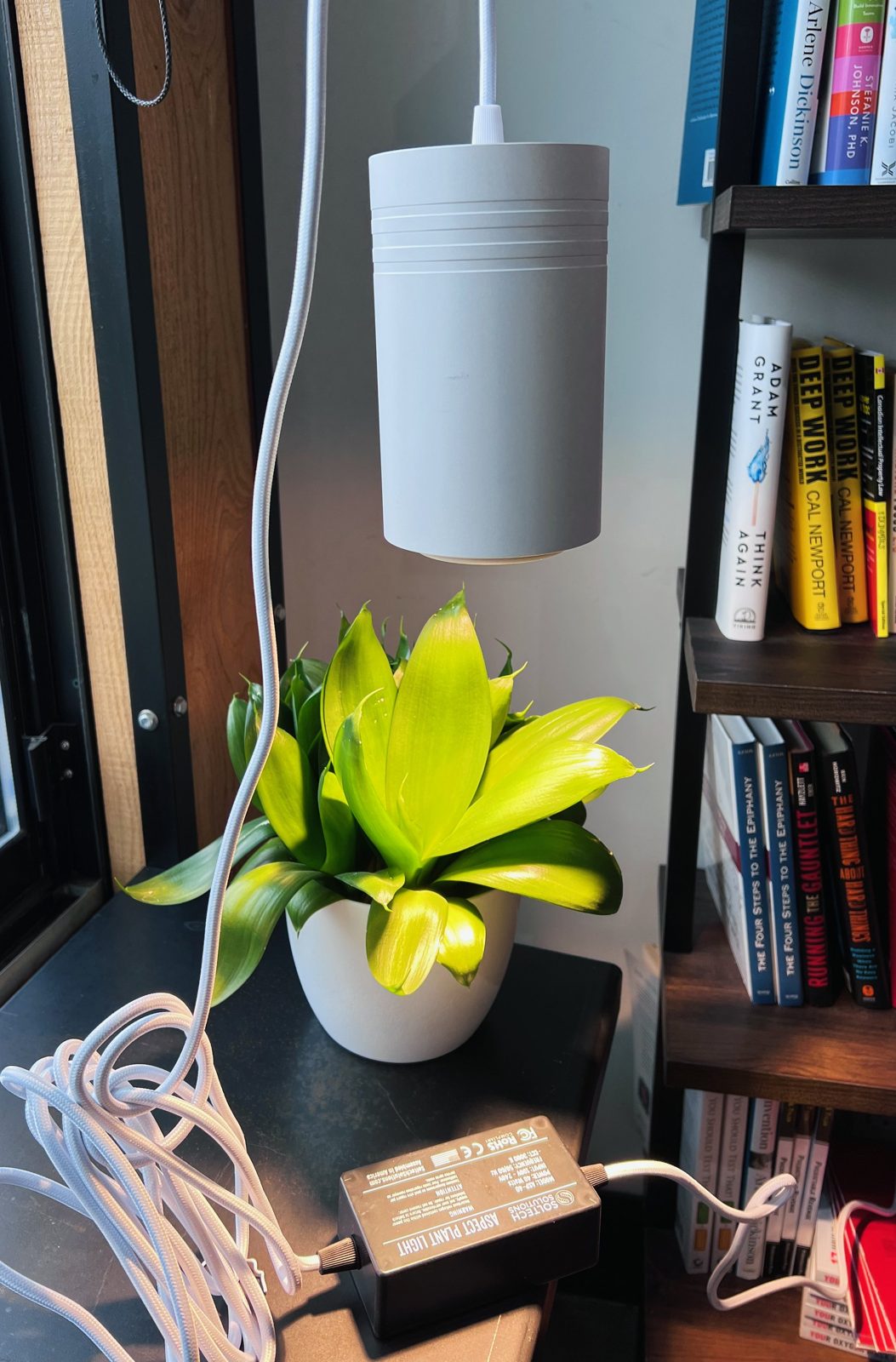
To use an LED grow light, place it directly above the plant, 15 to 60 cm (6 to 24 in) from the top leaves depending on how strong the light is. Run it for 12 to 14 hours a day on a timer, and turn it off at night. Then watch the plant for a few weeks and move the light closer or farther based on how the leaves respond.
Distance and hours matter more than anything else about the light. A good light hung too far away does little. A modest light hung close and run long enough can keep most houseplants growing through a dark winter.
I earn a commission when you buy through links to Amazon. It costs you nothing extra.
Pick a white, full-spectrum light
White LED grow lights give plants what they need and let you see your plants in natural color. Pink and purple lights also grow plants, but they make a room hard to live in and hide pests and leaf problems.
Look for “full spectrum” on the package and a color temperature between 3000K and 6500K. This article covers how to use a light you already have. For help buying one, see how to choose a grow light for houseplants.
How far to hang the light
Light gets weaker fast as it moves away from the source. Doubling the distance cuts the light on the leaf to about a quarter. This is why distance is the first thing to get right.
Use the maker’s stated distance if one is given. If not, start here.
| Type of light | Low-light plants | Medium-light plants | High-light plants |
|---|---|---|---|
| LED strip or bar | 20 to 30 cm (8 to 12 in) | 15 to 20 cm (6 to 8 in) | 10 to 15 cm (4 to 6 in) |
| Single screw-in grow bulb | 45 to 60 cm (18 to 24 in) | 30 to 45 cm (12 to 18 in) | 20 to 30 cm (8 to 12 in) |
| Larger panel | 60 to 90 cm (24 to 36 in) | 45 to 60 cm (18 to 24 in) | 30 to 45 cm (12 to 18 in) |
Low-light plants include pothos, snake plant, and ZZ plant. Medium-light plants include monstera, hoya, and African violet. High-light plants include cacti, echeveria, and jade plant.
Measure from the light to the top leaves, not to the soil. Raise the light as the plant grows.
Aim the light from above
Plants grow toward their light. A light placed to one side makes stems lean and leaves twist. A light directly overhead gives even, upright growth.
If the light must sit to the side, turn the pot a quarter turn each week.
How many hours to run it
| Situation | Hours per day |
|---|---|
| Plant near a window, light is a winter top-up | 4 to 6, in the morning or evening |
| Plant in a dim room with some daylight | 10 to 12 |
| Grow light is the only light | 12 to 14 |
| Succulents, cacti, and seedlings under lights only | 14 to 16 |
Plants need darkness as well as light. Give them at least 8 hours of dark each night. Running a light for 24 hours does not double growth, and it stresses many plants.
Some plants set flower buds in response to long nights. Christmas cactus, poinsettia, and kalanchoe need long, unbroken nights in fall to bloom. Keep them away from grow lights and evening lamps at that time of year.
Put it on a timer
A timer is the most useful add-on for a grow light. It gives the plant the same day length every day, and you never forget to turn the light on or off.
A plain plug-in outlet timer from Amazon is all it takes. A smart plug does the same job from your phone. Set the light to come on in the morning and go off in the evening, so it matches the natural day.
Set it up, step by step
- Choose the spot. Pick a place where the light can sit above the plants and a plug is in reach.
- Mount or hang the light. Use a clamp, a shelf bracket, a pendant cord, or a floor lamp with the shade removed. A full-spectrum LED grow bulb fits any standard lamp socket.
- Measure the distance. Use the table above. Measure to the top leaves.
- Group plants by need. Put high-light plants in the center, right under the light. Put low-light plants at the edges.
- Plug into a timer. Set the hours from the table above.
- Keep cords dry. Run cords away from saucers and watering paths. Make a drip loop so water cannot run down the cord into the plug.
- Watch for three to four weeks. Then adjust.
Read the plant and adjust
The plant tells you if the setup is right.
Too little light:
- Long gaps between leaves
- Stems that stretch and lean toward the light
- New leaves that are small and pale
- Colored or variegated leaves that fade to plain green
- Soil that stays wet for a long time
Fix it by moving the light 5 to 10 cm (2 to 4 in) closer, or by adding two hours a day.
Too much light:
- Pale, bleached, or yellow patches on the top leaves
- Crisp brown patches on the leaves nearest the light
- Leaves that curl or fold away from the light
- Red or purple stress color on plants that are normally green
Fix it by raising the light 10 to 15 cm (4 to 6 in), or by cutting two hours a day. Bleached patches do not recover, but new leaves will come in normal. See how to fix sunburn on houseplant leaves.
Change one thing at a time, and give the plant a few weeks before you change another.
Care changes under a grow light
A plant under a grow light keeps growing when plants at the window slow down. Its care changes with that.
- Water. More light means the plant uses more water. Check the soil more often than you did before.
- Fertilizer. A plant that is growing in winter under lights can be fed at half strength. A plant that has stopped growing does not need food.
- Heat. LEDs run cool, but the fixture still gives off some warmth. Leaves that touch the bulb can scorch.
- Dust. Wipe the bulb or strip with a dry cloth every month or two, with the light off and cool. Dust cuts the light output.
- Humidity. Furnace-dry winter air and extra light together dry plants fast. See how to increase humidity for houseplants in winter.
Quick checklist
- White, full-spectrum LED
- Directly above the plant
- 15 to 60 cm (6 to 24 in) from the top leaves, by light type and plant
- 12 to 14 hours a day on a timer, with at least 8 hours of dark
- Check leaves after three to four weeks and adjust one thing at a time