Choose a pot with a drainage hole, 2 to 5 cm (1 to 2 in) wider than the root ball. Pick terracotta if you water too much. Pick plastic or glazed ceramic if you forget to water.
Those three choices, drainage, size, and material, decide how long the soil stays wet. That decides whether the roots live.
I earn a commission when you buy through links to The Sill and Amazon. It costs you nothing extra.
Rule 1: a drainage hole
Water has to leave the pot. Without a hole it pools at the bottom, the roots sit in it, and they rot.
A layer of gravel or pot shards in the bottom does not fix this. Water still collects, just higher up and closer to the roots.
The pot you love has no hole? Use it as a cover pot.
- Keep the plant in a plain plastic nursery pot with holes.
- Set the nursery pot inside the pretty pot.
- Lift the plant out to water it at the sink.
- Let it drain for 10 minutes, then put it back.
This is how most plant shops do it. It also makes repotting simple, and the plant stays in one piece if the pot gets knocked over.
You can drill a hole in ceramic with a diamond bit, slow speed, and water on the bit. Practice on a pot you do not care about.
Rule 2: the right size
| Plant’s current pot | Next pot |
|---|---|
| Up to 25 cm (10 in) wide | 2 to 5 cm (1 to 2 in) wider |
| More than 25 cm (10 in) wide | 5 to 8 cm (2 to 3 in) wider |
A pot that is too big holds a lot of soil with no roots in it. That soil stays wet for weeks, and wet soil rots roots. Moving up one size at a time feels slow, and it is how plants stay alive.
Depth matters too.
- Shallow, wide pots suit succulents, string of pearls, African violets, and Christmas cactus. Their roots are short.
- Deep pots suit plants with a long main root or a heavy top, such as ponytail palm and indoor trees.
- Standard pots, about as deep as they are wide, suit the rest.
Rule 3: match the material to how you water
| Material | Dries | Weight | Best for | Watch for |
|---|---|---|---|---|
| Terracotta | Fast | Medium | Succulents, cacti, snake plant, ZZ plant, hoya, and people who water too much | A white crust on the outside. It wipes off. Breaks in a fall. |
| Glazed ceramic | Slow | Heavy | Tall plants that need a steady base, and most foliage plants | Many have no drainage hole |
| Plastic | Slow | Light | Ferns, calathea, peace lily, and people who forget to water | Tips over under a tall plant. Sun makes it brittle. |
| Concrete and stone | Slow to medium | The heaviest | Big floor plants that stay put | Hard to move. Can scratch floors. |
| Metal | Slow | Light to medium | Cover pots only | Rusts, and heats up in sun |
| Baskets and wood | Not for soil | Light | Cover pots, with a saucer inside | Rot if they stay damp |
| Fabric grow bags | The fastest | Light | Plants that spend summer outdoors | Leak onto floors |
| Self-watering | Stays moist | Medium | Peace lily, ferns, African violets, and thirsty plants | Too wet for succulents, snake plants, and ZZ plants |
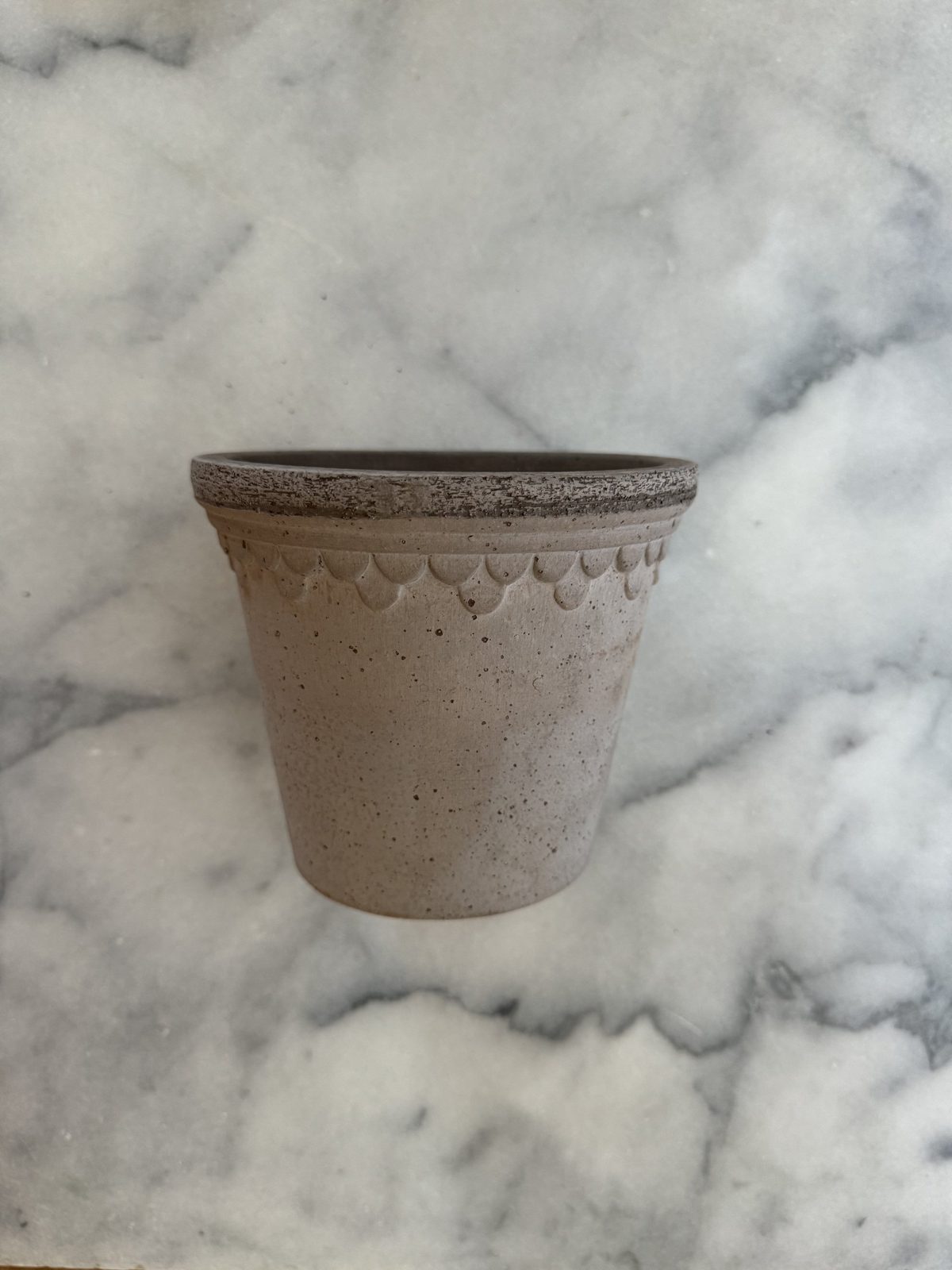
Why terracotta dries fast. Unglazed clay is porous. Water moves through the walls and evaporates. The soil dries from the sides as well as the top, and air reaches the roots. That is a safety net for anyone with a heavy watering hand.
Why weight matters. A tall plant in a light pot tips. A fiddle leaf fig, a tall snake plant, or a rubber plant wants a heavy ceramic or concrete pot with a wide base. A pot that is wider than it is tall is the hardest to knock over.
Match the pot to the plant
| Plant type | Pot |
|---|---|
| Succulents and cacti | Terracotta, shallow, one size up at most |
| Snake plant and ZZ plant | Terracotta or heavy ceramic. Thick roots can crack thin plastic. |
| Monstera and climbing philodendron | A heavy pot deep enough to hold a moss pole |
| Ferns, calathea, and peace lily | Plastic or glazed ceramic, to hold moisture |
| Moth orchid | A clear plastic orchid pot with slits, inside a cover pot |
| Pothos, hoya, and other trailing plants | A hanging pot with a hole and a drip tray that clips on |
| Indoor trees | Heavy ceramic or concrete, on a caddy with wheels |
| Air plant | No pot at all |
Saucers and floors
A pot with a hole needs something under it.
- Use a saucer a little wider than the base of the pot.
- Glazed or plastic saucers hold water. Unglazed terracotta saucers sweat through and mark wood.
- Put a cork mat or a plant stand under any pot on a wood floor. A plant caddy with wheels from Amazon makes a heavy pot easy to move.
- Empty the saucer 15 minutes after you water. Roots that sit in a full saucer rot the same as roots in a pot with no hole.
Where to buy pots
Garden centers and hardware stores sell plain terracotta for the least money. It is the best value in houseplants. If you have no garden center nearby, Amazon sells terracotta pots with saucers in sets.
Thrift stores are full of ceramic pots. Most have no hole, so use them as cover pots.
For a gift, or a pot meant to be seen, The Sill sells ceramic planters on their own and with a plant already potted in them. Check each listing for a drainage hole before you buy.
Before you buy any pot, measure the nursery pot the plant is in now. Take the number with you.
Signs the pot is wrong
| What you see | What it means |
|---|---|
| Soil stays wet for more than two weeks | Pot too big, no drainage, or a slow-drying material in low light |
| Water runs straight through, and the plant wilts in days | Pot too small. Roots have filled it. |
| Roots grow out of the drainage holes | Time to size up |
| The plant falls over | Pot too light or too narrow |
| A plastic pot bulges or cracks | Roots or rhizomes need room |
When it is time to move up, follow how to repot a houseplant step by step, and pick a mix from the best potting soil for indoor plants.
Quick answers
Do houseplant pots need drainage holes? Yes. Use a pot with no hole as a cover pot only.
Is terracotta or plastic better? Terracotta if you water too much. Plastic if you forget.
How much bigger should a new pot be? 2 to 5 cm (1 to 2 in) wider for most plants.
Are self-watering pots good? For plants that like steady moisture, yes. They are too wet for succulents and snake plants.
Can I plant straight into a pot with no hole? It can work for an expert with a careful hand. A cover pot is safer and easier.